
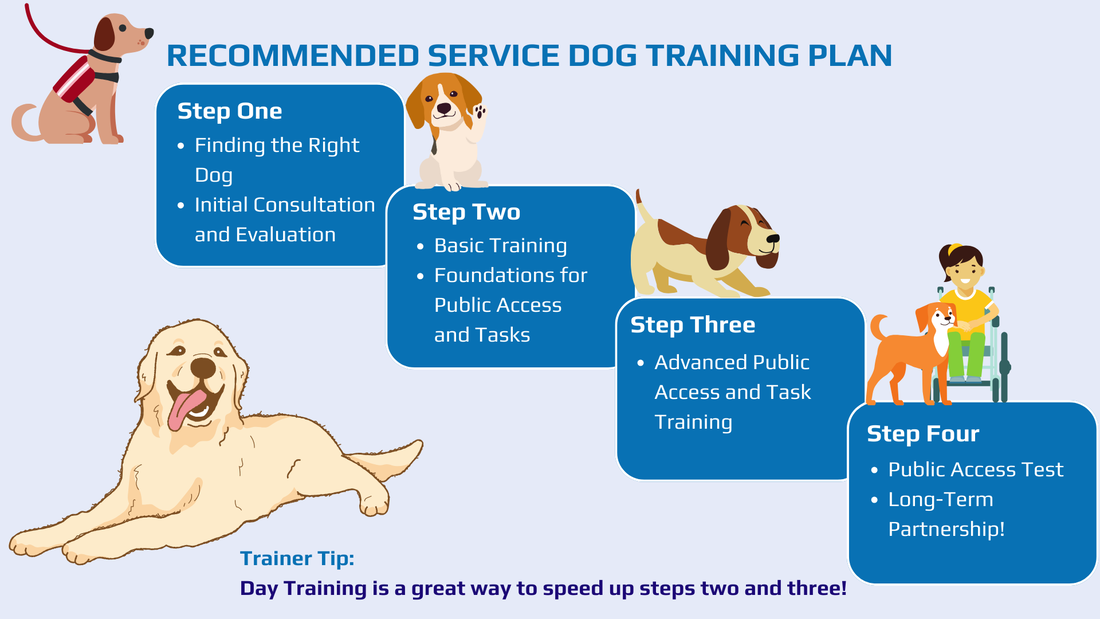
Image Source: www.bonddogtraining.com
How Long Does Service Dog Training Take? Realistic Times
So, you’re curious: How long does service dog training take? The answer isn’t a simple number, as it varies greatly based on the dog, the handler, and the specific tasks the dog needs to learn. However, a general estimate for a fully trained service dog, ready to work effectively with its handler, is typically between 18 months and 2 years. This timeframe encompasses basic obedience, advanced task training, and public access socialization.
The journey of training a service dog is a profound commitment, demanding patience, consistency, and a deep bond between dog and handler. It’s a process that transforms a willing canine companion into a highly specialized partner, capable of performing critical tasks that enhance the life of an individual with a disability. When considering this endeavor, one of the most common questions is about the service dog obedience duration, which forms the bedrock of all subsequent training. Alongside this, specific needs, like those for individuals with PTSD, autism, or mobility challenges, introduce their own unique training timelines.
The Foundation: Basic Obedience and Socialization
Before a service dog can learn specialized tasks, it must master a strong foundation of service dog obedience. This is non-negotiable and includes commands like:
- Sit, Stay, Down, Come: Reliable responses even with distractions.
- Heel: Walking calmly by the handler’s side.
- Leave It: Ignoring tempting or potentially harmful items.
- Place: Going to a designated spot and staying there.
This phase typically takes 4 to 6 months of consistent, daily practice. It’s not just about the dog learning the commands; it’s about the dog understanding that the handler’s cues are paramount and that obedience is a way to please and work with their partner.
Simultaneously, early socialization is crucial. This involves exposing the puppy to a wide variety of environments, people, sounds, and other animals in a positive and controlled manner. This helps the dog develop into a calm, confident, and non-reactive animal, essential for public access. Without proper socialization, even the most well-trained dog can struggle in busy or unfamiliar settings.
Advanced Task Training: Tailoring to Specific Needs
Once the basic obedience is solid, the focus shifts to specialized task training. This is where the service dog obedience duration extends significantly, as each task requires meticulous repetition and refinement. The complexity of the tasks directly influences the overall service dog training timeline.
PTSD Service Dog Training Timeline
For a PTSD service dog, tasks might include deep pressure therapy (lying on the handler to provide calming pressure), interrupting dissociation or panic attacks, creating a buffer zone in public, or retrieving medication.
- Deep Pressure Therapy: This can take 2 to 4 months to teach reliably, ensuring the dog applies the correct pressure and duration.
- Interrupting behaviors: Training a dog to nudge, paw, or alert the handler to an impending panic attack might take 3 to 6 months, depending on how the dog naturally exhibits these behaviors and how well they can be shaped into a trained response.
- Retrieving specific items: This is similar to retrieving a ball but requires the dog to identify and bring a specific object (e.g., a particular medication bottle). This could add another 1 to 2 months to the training.
The PTSD service dog training timeline is highly individualized because panic attacks and dissociative episodes manifest differently in each person. The dog must be attuned to subtle cues and respond appropriately.
Autism Service Dog Training Length
An autism service dog is trained to provide safety and emotional regulation for children and adults with autism spectrum disorder. Common tasks include:
- Deep Pressure Therapy (DPT): Similar to PTSD dogs, DPT is a cornerstone, helping to calm sensory overload. The autism service dog training length for this can be 2 to 4 months.
- Tethering/Blocking: For children prone to bolting, the dog can be trained to act as a physical barrier or to gently pull the child back. This requires significant strength and impulse control from the dog, potentially taking 4 to 8 months to train safely and effectively.
- Interrupting repetitive behaviors: A dog might be trained to nudge or lick the individual to interrupt self-stimulatory behaviors that can be harmful. This involves careful observation of the individual’s patterns and shaping the dog’s response, which can take 3 to 6 months.
The autism service dog training length also includes extensive exposure to typical childhood environments and activities to ensure the dog remains a calm and reliable presence.
Guide Dog Training Duration
Guide dog training duration is a highly specialized and intensive process. These dogs are trained to navigate the world with a visually impaired handler, avoiding obstacles, identifying safe paths, and alerting to hazards.
- Basic Navigation: Teaching the dog to respond to directional cues and avoid static obstacles (like walls or poles) can take 3 to 5 months.
- Advanced Navigation: This includes training to navigate around moving obstacles (people, bikes), identify dropped objects, and follow specific routes. This can add another 3 to 6 months.
- Intelligent Disobedience: This critical skill involves the dog disobeying a command if it believes it would put the handler in danger (e.g., refusing to cross a street if a car is approaching). This takes significant time and a deep understanding of the dog’s judgment, often requiring 2 to 4 months of advanced scenario training.
The overall guide dog training duration, from starting specialized tasks to being fully matched with a handler, can be anywhere from 6 months to over a year for the dog itself, not including the handler’s training.
Mobility Assistance Dog Training Time
Mobility assistance dogs are trained to help individuals with physical disabilities. Tasks can include:
- Retrieving dropped items: This is a common task that requires a gentle mouth and careful handling of various objects, taking 2 to 4 months.
- Opening and closing doors: This involves specific tugging or pushing actions, which can take 3 to 6 months to train reliably.
- Assisting with balance or bracing: Dogs trained for bracing need significant strength and stability, requiring 6 to 12 months of specialized conditioning and task training.
- Carrying items: From small bags to larger objects, this task requires a strong retrieve drive and the ability to carry with control, adding another 3 to 6 months.
The mobility assistance dog training time is heavily influenced by the specific physical needs of the handler. Tasks that require significant physical exertion from the dog will naturally take longer to train and ensure the dog’s safety and longevity.
Hearing Dog Training Length
Hearing dogs are trained to alert their deaf or hard-of-hearing handlers to important sounds.
- Sound Recognition and Alert: Training the dog to recognize specific sounds (doorbell, alarm clock, phone ringing, a child crying) and then alert the handler (e.g., by nudging, pawing, or leading to the source) is a core component. This can take 4 to 8 months per sound, as each sound needs to be distinct and reliably associated with an alert.
- Interruption and Direction: Once alerted, the dog may need to guide the handler to the source of the sound. This adds a layer of complexity and can take another 2 to 3 months.
The hearing dog training length requires a handler to be actively involved in identifying the sounds that are most critical for their daily life.
Psychiatric Service Dog Training Duration
Psychiatric service dogs (PSDs) are often confused with emotional support animals, but they are trained to perform specific tasks to mitigate a psychiatric disability. The psychiatric service dog training duration is similar to PTSD dogs, focusing on tasks that provide direct assistance.
- Deep Pressure Therapy: As mentioned earlier, this is a common task taking 2 to 4 months.
- Behavioral Interruption: This can include interrupting self-harming behaviors, grounding techniques during dissociative episodes, or reminding the handler to take medication. The psychiatric service dog training duration for these tasks can range from 3 to 7 months, depending on the specific behavior being interrupted and the subtlety of the cues the dog needs to recognize.
- Alerting to impending episodes: Some PSDs can be trained to recognize subtle physiological changes preceding a mental health crisis, though this is a highly advanced skill that is not universally achievable.
The psychiatric service dog training duration often involves working with mental health professionals to identify the most critical tasks for the handler’s well-being.
Seizure Alert Dog Training Time
Seizure alert dog training time is a unique category because it often involves training a dog to predict or alert to an oncoming seizure. This is not always a trainable skill for every dog, and much of it relies on the dog’s innate ability to detect subtle physiological changes.
- Alerting to Pre-Seizure Cues: If a dog can detect these changes, training them to signal the handler can take 6 to 12 months or longer. This involves reinforcing the dog’s natural behavior when it precedes a seizure.
- Seizure Response: Training a dog to protect the handler during a seizure (e.g., lying beside them to prevent injury) or to get help can take 3 to 6 months.
The seizure alert dog training time is highly variable and depends on the dog’s natural aptitude for seizure detection, which is not a skill that can be “taught” in the traditional sense but rather honed and directed.
Medical Alert Dog Training Length
Medical alert dogs are trained to detect and alert handlers to dangerous changes in their body’s chemistry. This includes conditions like diabetes, Addison’s disease, or anaphylaxis.
- Scent Detection Training: This is the core of medical alert training. Dogs are trained to recognize specific scents associated with low or high blood sugar, allergen exposure, or other medical events. This process can take 6 to 12 months or even longer for each specific scent the dog needs to detect.
- Alerting Behavior: Once the scent is detected, the dog must be trained to alert the handler consistently and reliably. This might involve pawing, nudging, or barking, and can take an additional 2 to 4 months.
The medical alert dog training length is also dependent on the frequency of exposure to the target scent for training and the handler’s ability to accurately identify and manage their medical condition during training sessions.
How Long to Train a Service Dog for Anxiety
For how long to train a service dog for anxiety, the focus is often on tasks that help ground the handler, create a sense of security, and provide comfort during anxious episodes. These dogs are essentially a type of psychiatric service dog.
- Deep Pressure Therapy (DPT): As mentioned, this is a common task for anxiety, taking 2 to 4 months.
- Interruption of anxiety-driven behaviors: This could include licking a handler’s hand to prevent excessive nail biting or nudging to redirect attention away from anxious thoughts. This can take 3 to 6 months.
- Tactile Stimulation: Some dogs are trained to provide rhythmic pressure or licking as a calming input, which can take 2 to 3 months.
The question of how long to train a service dog for anxiety is answered by considering the individual’s specific triggers and the tasks that most effectively mitigate their symptoms.
Factors Influencing Training Time
Several key factors contribute to the overall service dog training timeline:
- Dog’s Age and Breed: While any breed can potentially be a service dog, breeds with a strong work ethic, trainability, and stable temperament (like Labrador Retrievers, Golden Retrievers, and Standard Poodles) often progress more smoothly. Puppies require more extensive socialization and basic training from a younger age. Older dogs might be set in their ways but can also have a more settled demeanor.
- Temperament and Trainability of the Dog: Some dogs are naturally more eager to please, less easily distracted, and have higher drive than others. A dog with a confident, adaptable, and eager-to-please temperament will generally learn faster.
- Handler’s Experience and Consistency: The handler’s ability to remain consistent with commands, training methods, and reinforcing desired behaviors is paramount. An experienced handler or one committed to diligent practice will likely see faster progress.
- Complexity of Tasks: As discussed, the more complex or nuanced the tasks, the longer the training will take. Predicting medical events is far more complex than retrieving a dropped item.
- Quality of Training Program/Trainer: Professional trainers with experience in specific service dog tasks can significantly streamline the process and ensure effective, humane training methods are used.
- Environmental Exposure and Generalization: A dog trained in a controlled environment needs extensive exposure to public places to generalize its skills. This phase requires time and careful management.
The Role of Professional Trainers vs. Owner-Training
The decision to work with a professional service dog training organization or to owner-train significantly impacts the timeline and cost.
| Training Approach | Typical Timeline (approx.) | Pros | Cons |
|---|---|---|---|
| Professional Program | 18-24 months (dog focused) | Highly experienced trainers, established curriculum, rigorous testing. | Higher cost, longer waiting lists, less direct handler involvement early on. |
| Owner-Training | 1-3 years (dog & handler) | Stronger handler-dog bond, more flexibility, potentially lower cost. | Requires immense dedication, time, knowledge, risk of developing errors. |
Owner-training a service dog, while rewarding, demands a significant investment of time and a commitment to learning best practices. It often extends the overall service dog training timeline as the handler learns alongside the dog and seeks external guidance when needed.
Public Access Training: The Final Frontier
Beyond task training, a service dog must be proficient in public access. This means the dog must behave impeccably in public spaces, regardless of distractions. This includes:
- Ignoring food and other animals.
- Remaining calm in crowded or noisy environments.
- Not solicit attention from the public.
- Following handler cues precisely.
This phase can take 3 to 6 months of dedicated practice in various public settings, ensuring the dog is comfortable and well-behaved everywhere. It’s about generalization – applying learned behaviors in new and challenging environments.
Realistic Expectations
It’s crucial to have realistic expectations regarding service dog training. It is not a quick process. The entire journey, from acquiring a suitable dog (often a puppy) to the dog being fully integrated and working seamlessly with the handler, can easily span 1.5 to 3 years.
- Puppy Raising (6-18 months): This includes basic obedience, socialization, and initial task introduction.
- Advanced Task Training (6-12 months): Focuses on specialized skills.
- Public Access Training and Generalization (3-6 months): Ensuring reliable performance in public.
This breakdown highlights that the service dog obedience duration is just one component of a much larger, more involved process.
Conclusion
In summary, the question of “How long does service dog training take?” doesn’t have a single, simple answer. The service dog obedience duration forms the initial phase, typically 4-6 months. However, when considering specialized tasks, the PTSD service dog training timeline, autism service dog training length, guide dog training duration, mobility assistance dog training time, hearing dog training length, psychiatric service dog training duration, seizure alert dog training time, medical alert dog training length, and how long to train a service dog for anxiety are all tailored to specific needs.
A realistic timeframe for a fully trained service dog is generally 18 months to 2 years, and often longer, depending on the individual dog, handler, and the complexity of the tasks required. It is a testament to the dedication, patience, and unwavering commitment that defines the partnership between a person with a disability and their extraordinary service dog.
Frequently Asked Questions (FAQ)
Q1: Can I train my own service dog?
A1: Yes, you can train your own service dog. This is known as owner-training. However, it requires a significant commitment of time, patience, and research to learn effective training methods and ensure your dog meets all the necessary requirements for both task performance and public access.
Q2: What is the fastest way to train a service dog?
A2: There isn’t a “fastest” way, as rushing the process can lead to an inadequately trained dog. However, consistency, positive reinforcement methods, and working with a reputable trainer can help streamline the process. The focus should always be on the dog’s reliability and welfare, not on speed.
Q3: How old should a service dog be when it starts training?
A3: Service dog training often begins with a puppy. Socialization and basic obedience can start as early as 8 weeks old. However, specialized task training typically begins when the dog is around 6-12 months old, once they have a solid foundation and have reached a certain level of maturity.
Q4: Can service dogs be trained for multiple disabilities?
A4: Yes, a service dog can be trained to perform tasks for multiple disabilities if the tasks do not conflict with each other and the dog is capable of handling the workload. However, this significantly increases the complexity and duration of training.
Q5: What are the legal requirements for service dogs?
A5: In the United States, under the Americans with Disabilities Act (ADA), a service animal is defined as a dog that has been individually trained to do work or perform tasks for the benefit of an individual with a disability. There are no mandatory registration or certification requirements for service dogs, although some handlers choose to obtain identification. The dog must be under the handler’s control and housebroken.
Q6: How do I know if my dog is a good candidate for service dog training?
A6: Ideal candidates typically possess a calm temperament, are eager to please, have a good work ethic, are not easily startled or reactive, and have good physical health. They should also be able to focus despite distractions. Temperament testing is often part of the selection process.