
Can you keep your dog off the table when you’re not home? Yes, you absolutely can! It requires a combination of effective training, environmental management, and understanding your dog’s motivations. This comprehensive guide will walk you through proven methods to ensure your furry friend stays grounded while you’re away.
Dogs often jump on tables for various reasons: curiosity, boredom, seeking attention, or simply because they’ve discovered something appealing to them, like leftover food. When you’re not there to supervise, this behavior can escalate. The key is to create a home environment that discourages this action and provides better outlets for your dog’s energy and needs.
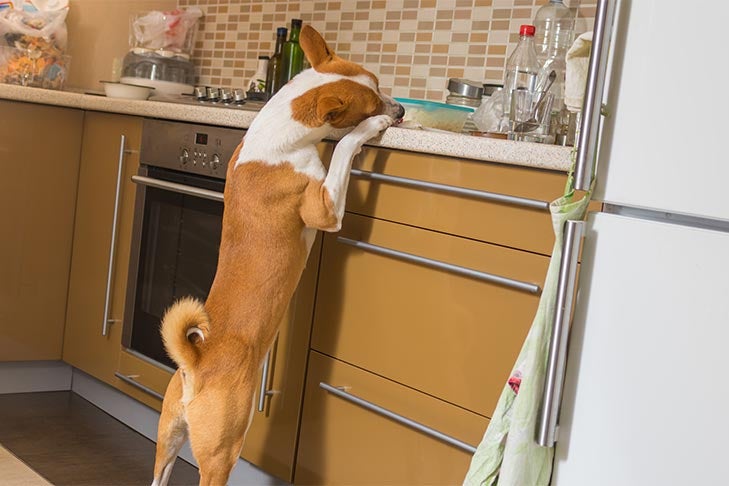
Image Source: www.akc.org
Why Dogs Jump on Tables
Before we dive into solutions, it’s helpful to grasp why this habit forms. Dogs are intelligent and opportunistic creatures. If a table offers something desirable – a tasty crumb, an interesting scent, or simply a novel vantage point – they’ll investigate. When unsupervised, there’s no immediate consequence to deter them. This can lead to a learned behavior that’s hard to break.
Common Triggers for Table Jumping
- Food Scraps: The most obvious reason. Even tiny residues can be a powerful lure.
- Boredom and Lack of Stimulation: A dog with pent-up energy will find ways to entertain itself, and exploring the table might be it.
- Curiosity: What’s on the table? What does it smell like? Dogs explore with their noses and mouths.
- Seeking Attention (Even Negative): Some dogs learn that jumping on the table gets a reaction from their owners, even if it’s scolding.
- Escape from Other Dogs or Situations: In a multi-pet household, the table might be seen as a safe haven.
- Instinctual Behavior: Some breeds have a natural inclination to seek higher ground or “scavenge.”
Essential Steps to Keep Your Dog Off the Table
Success in dog training for off-limits areas hinges on consistency and a multi-faceted approach. You can’t just rely on one tactic. It’s about making the table unappealing and providing better alternatives.
1. Management: The First Line of Defense
When you can’t supervise, you must manage the environment. This is crucial for preventing dogs from jumping on furniture, including tables.
Securing Food and Table Surfaces
- No Leftovers: Never leave food or even crumbs on the table. Clear dishes immediately after meals.
- Tablecloths and Runners: While not foolproof, some dogs are discouraged by different textures. However, a determined dog will still try.
- Protective Covers: For valuable tables, consider clear plastic mats or protective covers that make the surface less inviting or even slightly wobbly. This is a form of furniture protection for dogs.
Creating a Safe and Stimulating Environment
This is key to dog proofing your home effectively. If your dog is happy and engaged, they are less likely to seek forbidden thrills.
- Provide Appropriate Chew Toys: Durable chew toys, puzzle feeders, and stuffed Kongs can keep your dog occupied and mentally stimulated. This addresses boredom, a major driver of destructive or unwanted behaviors.
- Mental Stimulation: Rotate toys. Use interactive feeders that make your dog “work” for their food.
- Physical Exercise: Ensure your dog gets enough exercise before you leave. A tired dog is a well-behaved dog. A good walk or play session can significantly reduce anxiety and the urge to get into mischief.
2. Deterrents: Discouraging the Behavior
Dog deterrents are tools that make the table an unpleasant place for your dog to be. These work best when combined with training.
Sensory Deterrents
These rely on making the table’s surface or immediate surroundings unpleasant to the touch, smell, or sound.
- Textured Mats: Placing bumpy, uncomfortable, or even slightly unstable mats on the table when you’re gone can deter them. Think plastic carpet runners with the bumpy side up, or specially designed pet deterrent mats.
- Aluminum Foil: Many dogs dislike the crinkly sound and texture of aluminum foil. Cover the table surface with it.
- Citrus Scents: Dogs generally dislike the smell of citrus. You can use diluted citrus essential oils (ensure they are safe for dogs and used sparingly) on the table edges, or simply place orange or lemon peels on the table. Important: Always research essential oil safety for pets before use. Some oils are toxic.
- Motion-Activated Devices: These can be very effective.
- Compressed Air Cans: Devices that emit a hiss of compressed air when motion is detected can startle your dog away from the table without causing harm. Place them strategically on or around the table.
- Ultrasonic Devices: These emit a high-frequency sound that is unpleasant to dogs but usually inaudible to humans. Place them near the table.
- Shake Cans: Two empty soda cans filled with a few coins or pebbles, taped shut, and placed on the edge of the table can fall and create a startling noise if disturbed.
Important Considerations for Deterrents
- Safety First: Never use anything that could physically harm your dog, like sharp objects or toxic substances.
- Consistency: Deterrents only work if they are consistently applied.
- Observation: Watch to see what your dog reacts to. Some dogs are more sensitive to certain deterrents than others.
- Transitioning Away: Once your dog learns not to jump, you can gradually remove the deterrents to see if the behavior persists.
3. Training: Teaching Boundaries and Alternatives
Training is the cornerstone of long-term behavior modification. It teaches your dog what you want them to do.
Boundary Training for Dogs
This teaches your dog that certain areas or objects are off-limits.
- “Off” Command: Teach your dog to get off the table when you are present. Reward them for dismounting.
- “Leave It”: This command is useful for anything you don’t want your dog to interact with, including table surfaces.
- Leash Training: When you are home and the dog is still learning, keep them on a leash tethered to you, or to a piece of furniture, so they cannot reach the table. If they attempt to jump, redirect them immediately.
Positive Reinforcement for Dogs
This is the most effective and humane way to train. It focuses on rewarding desired behaviors.
- Rewarding Good Behavior: When your dog is in the room and not attempting to jump on the table, praise them and give them a treat. This reinforces that calm, table-avoiding behavior is good.
- Redirecting: If you catch your dog showing interest in the table, interrupt the behavior with a sound (like a gentle clap) and immediately redirect them to an appropriate toy or activity. Reward them for engaging with the alternative.
Safe Dog Alternatives for Climbing
Dogs often like to get to higher places. Providing acceptable alternatives can satisfy this need.
- Dog Beds: Elevated dog beds can give your dog a sense of being “up” without being on the forbidden furniture.
- Dog Stairs or Ramps: For older dogs or those with mobility issues, ramps or stairs can help them access their own comfortable resting spots, like a sofa or a low bed, safely.
- Window Perches: If your dog enjoys looking out windows, a sturdy window perch can provide a high vantage point that is theirs.
4. Crate Training Benefits
Crate training benefits extend beyond housebreaking. It can be an invaluable tool for keeping dogs out of kitchen areas or off tables when you’re not home.
- Safe Haven: A properly introduced crate becomes a secure den for your dog.
- Prevents Unwanted Behavior: When crated, your dog cannot access the table or engage in other destructive behaviors.
- Reduces Anxiety: For some dogs, a crate can reduce anxiety by providing a contained, familiar space.
Making the Crate Positive
- Start Slowly: Never force your dog into a crate.
- Positive Associations: Feed meals in the crate, give special treats and toys inside, and leave the door open initially.
- Gradual Departures: Start with short absences, increasing the time slowly as your dog becomes comfortable.
5. Professional Help
If the behavior persists despite your best efforts, or if your dog exhibits severe separation anxiety or other behavioral issues, consult a professional dog trainer or a veterinary behaviorist. They can assess the situation and provide tailored strategies.
Common Pitfalls to Avoid
- Inconsistency: Not all family members or household members must adhere to the rules. This sends mixed signals.
- Punishment: Punishing your dog after the fact (when you return home and find evidence) is ineffective. Dogs don’t connect the punishment to the past action. It can also create fear and anxiety.
- Over-Reliance on Deterrents: Deterrents are temporary aids. They don’t replace training.
- Underestimating Boredom: A bored dog will always find trouble. Ensure adequate mental and physical stimulation.
Sample Training Plan Outline
This is a basic outline. Adjust based on your dog’s age, breed, and individual personality.
Week 1: Foundation and Management
- Daily:
- Ensure at least two exercise sessions (morning and evening).
- Provide a stuffed Kong or puzzle feeder when leaving for short periods (e.g., 1 hour).
- Keep table surfaces meticulously clean.
- Practice the “Off” command when the dog attempts to jump. Reward with praise and a treat when they comply.
- If crating, start with short durations while you are home.
Week 2: Introducing Deterrents and Reinforcing Alternatives
- Daily:
- Continue with management and exercise.
- Introduce one deterrent (e.g., aluminum foil on table) when leaving for longer periods (e.g., 2-3 hours).
- Actively redirect any table-climbing attempts towards a designated toy or bed, and reward the redirection.
- Practice “Leave It” with high-value items.
Week 3: Intensifying Training and Gradual Independence
- Daily:
- Increase supervised absences (e.g., 3-4 hours).
- If using multiple deterrents, rotate them or combine them if effective.
- Observe your dog’s behavior. If they are consistently avoiding the table, you can start to remove one deterrent at a time for short periods to test the behavior.
- Continue reinforcing good behavior with praise and treats.
Week 4 and Beyond: Maintenance and Monitoring
- Ongoing:
- Gradually phase out deterrents as your dog demonstrates reliable behavior.
- Continue to practice the “Off” and “Leave It” commands.
- Provide ongoing mental and physical stimulation.
- Periodically check table surfaces for cleanliness.
- If the behavior resurfaces, re-evaluate your training and management strategies.
Tables for Comparison
Here’s a quick look at different approaches:
| Method | Pros | Cons | Best For |
|---|---|---|---|
| Management | Immediate prevention, no training needed. | Requires constant vigilance, can be inconvenient. | All situations, especially early stages and when supervision is impossible. |
| Sensory Deterrents | Can be highly effective in discouraging the behavior. | Some dogs might overcome them; requires placement. | Dogs who are sensitive to textures, smells, or sounds. |
| Motion-Activated Deterrents | Effective at startling the dog away from the table. | Can be expensive; some dogs may become desensitized or fearful. | Dogs who are easily startled and learn quickly. |
| Positive Reinforcement | Builds a positive association with good behavior, humane. | Takes time and consistency; requires owner involvement. | All dogs, for long-term behavioral change. |
| Crate Training | Provides a safe, contained space; prevents access. | Requires proper introduction; some dogs may dislike crates. | Dogs prone to destruction or anxiety when left alone; short to medium absences. |
| Professional Training | Expert guidance, tailored solutions for difficult cases. | Can be costly. | Persistent problems, complex behavioral issues. |
Frequently Asked Questions (FAQ)
Q: Will my dog ever stop jumping on the table on their own?
A: It’s unlikely. Dogs learn through association and consequence. If there’s no negative consequence or clear redirection, the behavior will likely continue or even worsen.
Q: How long does it take to train a dog not to jump on tables?
A: This varies greatly depending on the dog’s age, temperament, breed, and the consistency of training. For some dogs, a few weeks of consistent effort may be enough. For others, it might take several months. Patience is key.
Q: Is it okay to put something bitter-tasting on the table?
A: While bitter sprays are sometimes used as dog deterrents, they are generally not recommended for table surfaces. They can transfer to food you might place there later and might not be effective for all dogs. Plus, they don’t teach the dog what to do, only what not to do.
Q: My dog only jumps on the table when I leave. What does this mean?
A: This often indicates separation anxiety or boredom. Ensure your dog has enough mental and physical stimulation before you leave. Consider providing engaging toys like puzzle feeders and, for severe cases, consult a professional about managing separation anxiety.
Q: Can I use a remote-controlled spray bottle to stop my dog?
A: Some owners use these, but be cautious. The effectiveness depends on the dog’s reaction. Some dogs might learn to associate the spray with your absence and become fearful or anxious when you leave, rather than learning not to jump. Stick to simpler deterrents or positive training methods first.
Q: My dog learned to open cabinets to get food. How do I stop this?
A: This is a separate issue requiring different dog proofing your home strategies. You’ll need childproof latches on cabinets and drawers. For food, ensure it’s inaccessible, even through creative means your dog might employ.
By implementing these strategies diligently and with patience, you can successfully teach your dog that the table is off-limits, even when you’re not home. This leads to a more harmonious household and a well-behaved canine companion.