
Deciphering the caloric content of your dog’s food is crucial for their health and well-being. Blue Buffalo dog food offers a wide variety of options, and knowing the calorie count for each is vital for proper portioning. This guide will help you navigate the world of Blue Buffalo calories, exploring the nutritional profiles of their popular lines and how to use their feeding guides effectively.
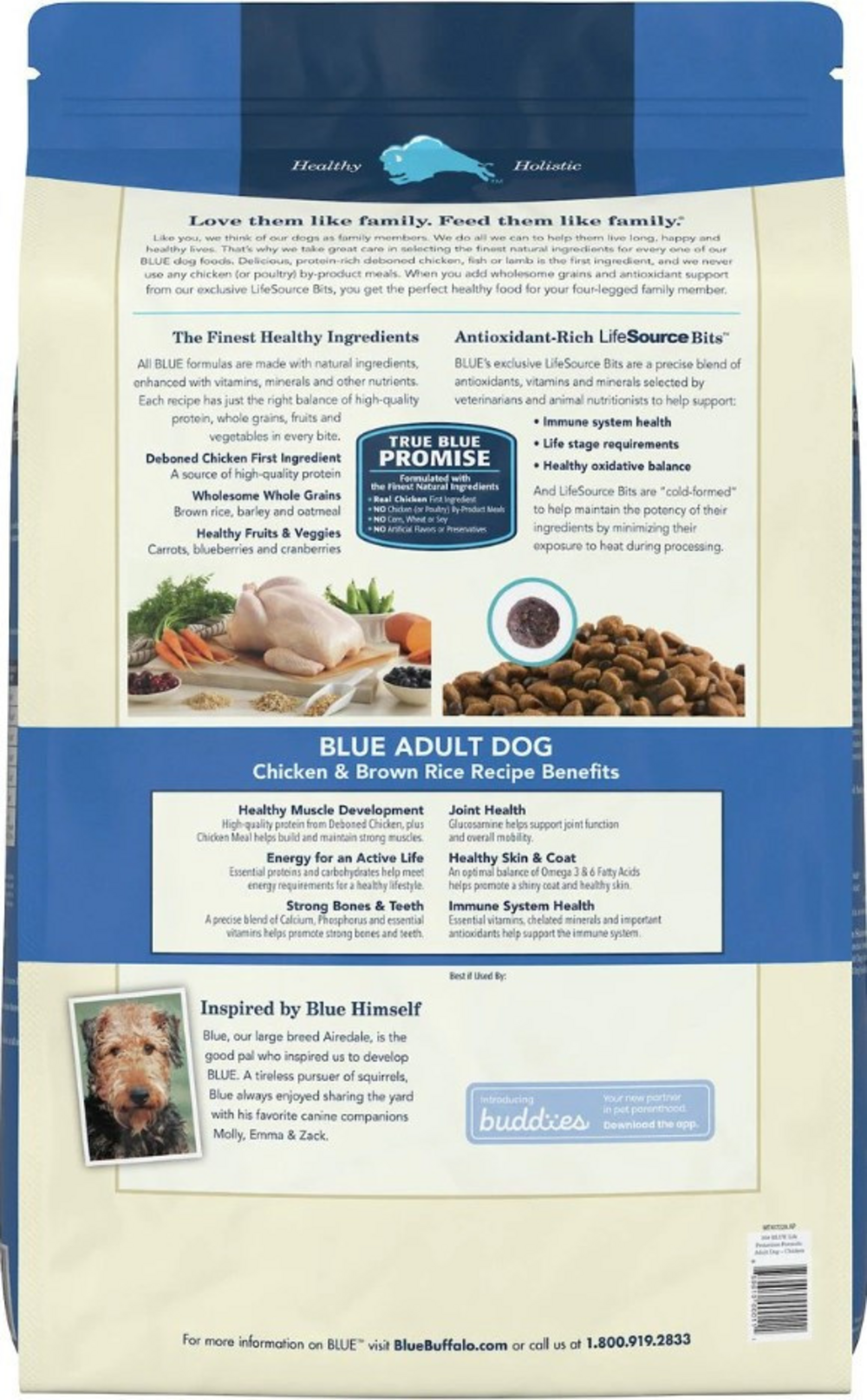
Image Source: nycpet.com
Blue Buffalo Dog Food Nutrition: A Closer Look
Blue Buffalo dog food is renowned for its commitment to wholesome ingredients, often featuring real meat as the first ingredient. The Blue Buffalo dog food nutrition profile emphasizes high-quality protein, beneficial fruits and vegetables, and a blend of vitamins and minerals. However, the exact calorie count varies significantly depending on the specific formula and the type of product (kibble vs. wet food).
Blue Buffalo Kibble Calories: Decoding the Dry Matter
When we talk about Blue Buffalo kibble calories, it’s important to remember that dry dog food is concentrated. The calorie density is much higher than wet food due to the lower moisture content. A typical cup of kibble might contain anywhere from 300 to over 500 calories, depending on the ingredients and specific recipe.
For example, a popular Blue Buffalo Life Protection Formula Adult Chicken & Brown Rice might have around 385 calories per cup. Contrast this with a Blue Buffalo Wilderness High Protein Grain-Free Chicken recipe, which could easily push over 450 calories per cup due to its higher protein and fat content.
Factors Influencing Kibble Calories:
- Protein and Fat Content: Recipes with higher protein and fat levels generally have more calories per serving.
- Carbohydrate Sources: Different carbohydrate sources (grains like rice, barley, or potatoes and peas in grain-free options) can have varying calorie densities.
- Added Ingredients: Some recipes might include calorie-dense additions like specific oils or supplements.
Blue Buffalo Wet Food Calories: Moisture and Meaty Goodness
Blue Buffalo wet food calories are typically lower per serving than kibble because of its high moisture content. A standard 3-ounce can of Blue Buffalo wet food might range from 100 to 200 calories. This makes wet food a good option for dogs who need to manage their weight or for owners looking to add palatability to their dog’s diet.
For instance, a Blue Buffalo Homestyle Recipe Chicken Dinner in a 3-ounce can might be around 120 calories. A more specialized formula, like a Blue Buffalo Basics Limited Ingredient Diet in wet food, might have a similar or slightly different calorie count depending on its specific ingredient makeup.
Blue Buffalo Puppy Food Calories: Fueling Growth and Development
Growing puppies have higher energy needs, and Blue Buffalo puppy food calories are formulated to meet these demands. Puppy formulas generally have a higher calorie density than adult formulas to support rapid growth, bone development, and cognitive function.
A Blue Buffalo Life Protection Formula Puppy Chicken & Brown Rice could contain around 400-450 calories per cup. These calories provide the essential energy for play, learning, and physical development. It’s crucial to follow the Blue Buffalo feeding guide for puppies to ensure they receive adequate nutrition without overfeeding, which can lead to developmental issues.
Blue Buffalo Senior Dog Food Calories: Tailored for Mature Canines
As dogs age, their metabolism slows down, and their energy needs may decrease. Blue Buffalo senior dog food calories are often adjusted to reflect this. Senior formulas typically have fewer calories per cup than adult formulas to help prevent weight gain, which can exacerbate joint issues and other age-related health problems.
A Blue Buffalo Life Protection Formula Senior Chicken & Brown Rice might offer around 350-380 calories per cup. These recipes also often include ingredients to support joint health, such as glucosamine and chondroitin.
Blue Buffalo Weight Management Dog Food Calories: Calorie Control for a Healthy Weight
For dogs struggling with their weight, Blue Buffalo weight management dog food calories are specifically formulated to be lower in calories and fat while maintaining high fiber content to help dogs feel full. These formulas aid in gradual and healthy weight loss.
A Blue Buffalo Life Protection Formula Healthy Weight Chicken & Brown Rice might contain around 320-350 calories per cup. The exact calorie count will be clearly labeled on the packaging, and adhering to the Blue Buffalo feeding guide for weight management is paramount.
Blue Buffalo Grain-Free Calories: Examining the Alternatives
Many owners opt for Blue Buffalo grain-free calories, and these formulas can differ in their caloric makeup. While grain-free diets replace traditional grains with ingredients like sweet potatoes, peas, and lentils, the calorie density can still vary.
A Blue Buffalo Wilderness Grain-Free Rocky Mountain Recipe with Bison might be around 460 calories per cup. The focus on higher protein and fat in many grain-free formulas often results in a slightly higher calorie count per cup compared to grain-inclusive counterparts.
Blue Buffalo Limited Ingredient Diet Calories: Simplicity and Specificity
For dogs with sensitivities or allergies, Blue Buffalo limited ingredient diet calories offer a focused nutritional approach. These diets typically have fewer ingredients, which can influence their overall calorie density.
A Blue Buffalo Basics Limited Ingredient Diet Salmon & Potato might be around 370-400 calories per cup. The goal here is often to provide digestible nutrition without common allergens, and calorie content is managed to suit a range of adult dogs.
Navigating the Blue Buffalo Feeding Guide: Your Calorie Compass
The Blue Buffalo feeding guide is an invaluable tool for determining the correct portion size for your dog. This guide is usually found on the back of every Blue Buffalo product bag or can and provides recommendations based on your dog’s weight and age.
How to Use the Feeding Guide:
- Identify Your Dog’s Current Weight: This is the most critical factor. Ensure you have an accurate weight for your dog.
- Determine Your Dog’s Life Stage: Puppy, adult, or senior? This affects their caloric needs.
- Consult the Chart: Locate your dog’s weight in the chart and find the corresponding daily feeding amount (usually in cups or cans).
- Consider Activity Level: The guide provides a baseline. Highly active dogs may need more food, while less active dogs may need less.
- Adjust as Needed: Monitor your dog’s body condition. If they are gaining unwanted weight, reduce the amount slightly. If they are too thin, increase it slightly.
Example of a Simplified Feeding Guide (Hypothetical):
| Dog’s Weight (lbs) | Daily Feeding Amount (Cups) |
|---|---|
| 10 | 1/2 – 3/4 |
| 20 | 3/4 – 1 1/4 |
| 30 | 1 – 1 1/2 |
| 50 | 1 1/2 – 2 1/4 |
| 70 | 2 – 2 3/4 |
Note: This is a hypothetical example. Always refer to the specific feeding guide on your Blue Buffalo product.
Calculating Daily Calorie Needs: The Bigger Picture
While the feeding guide offers a practical starting point, knowing your dog’s estimated daily calorie requirement can provide a more precise approach, especially if you’re feeding a mix of food types or have specific health concerns.
Estimating Your Dog’s Daily Calorie Needs:
A common method to estimate a dog’s daily caloric needs (RER – Resting Energy Requirement) is using this formula:
RER (in kcal/day) = 70 * (body weight in kg)^0.75
To convert pounds to kilograms, divide your dog’s weight in pounds by 2.2.
Then, to get the Daily Energy Requirement (DER), you multiply the RER by a factor that accounts for activity level, life stage, and health status. These factors typically range from 1.0 (neutered adult, average activity) to 1.8 (working dog, very active).
Example Calculation:
Let’s say you have a 50 lb (approx. 22.7 kg) adult dog with an average activity level.
- Calculate RER: 70 * (22.7 kg)^0.75 ≈ 70 * 12.2 ≈ 854 kcal/day
- Calculate DER (assuming a factor of 1.4 for an active adult): 854 kcal/day * 1.4 ≈ 1196 kcal/day
If your chosen Blue Buffalo food has 400 kcal per cup, you would feed approximately 1196 / 400 = 2.99 cups per day. This is a more precise calculation that complements the feeding guide.
Calorie Content by Blue Buffalo Product Line: A Comparative Look
To provide a clearer picture, let’s examine the approximate calorie ranges for popular Blue Buffalo product lines. These are general figures and can vary slightly between specific flavors within a line.
Blue Buffalo Life Protection Formula
This is their most popular line, offering balanced nutrition for everyday health.
- Kibble: Approximately 350-420 kcal per cup.
- Wet Food: Approximately 100-150 kcal per 3 oz can.
Blue Buffalo Wilderness
Focusing on a protein-rich, ancestral diet inspired by wolves.
- Kibble: Approximately 420-500+ kcal per cup.
- Wet Food: Approximately 120-180 kcal per 3 oz can.
Blue Buffalo Basics (Limited Ingredient Diet)
Designed for dogs with sensitivities.
- Kibble: Approximately 370-400 kcal per cup.
- Wet Food: Approximately 110-160 kcal per 3 oz can.
Blue Buffalo Baby Blue (Puppy Food)
Formulated for the specific needs of growing puppies.
- Kibble: Approximately 400-480 kcal per cup.
Blue Buffalo Senior
Tailored for the needs of older dogs.
- Kibble: Approximately 350-390 kcal per cup.
Blue Buffalo Weight Management
Lower calorie formulas for weight control.
- Kibble: Approximately 320-360 kcal per cup.
Note: These are approximate ranges. Always check the specific product packaging for the most accurate calorie information.
Why Calorie Counts Matter: Beyond the Numbers
Knowing the Blue Buffalo calories in your dog’s food is more than just an academic exercise; it’s a cornerstone of proactive pet healthcare.
Maintaining a Healthy Weight:
Obesity in dogs can lead to serious health issues, including diabetes, heart disease, arthritis, and a shortened lifespan. Accurate calorie tracking helps prevent overfeeding, a primary cause of pet obesity.
Managing Specific Health Conditions:
For dogs with diabetes, kidney disease, or other metabolic conditions, precise calorie and nutrient management is essential. Your veterinarian may recommend a specific Blue Buffalo formula and a precise feeding amount based on your dog’s condition.
Adjusting for Life Stage and Activity:
As mentioned, puppies need more calories than seniors, and a highly active dog requires more fuel than a couch potato. Understanding the calorie content allows you to fine-tune your dog’s diet accordingly.
Transitioning Between Foods:
When switching to a new Blue Buffalo formula, or any new food, a gradual transition is key. Knowing the calorie density of both the old and new food helps you manage portion sizes during the transition period to avoid digestive upset or sudden weight changes.
Frequently Asked Questions About Blue Buffalo Dog Food Calories
Q1: Where can I find the exact calorie count for my specific Blue Buffalo dog food?
A1: The most accurate calorie information can always be found on the product packaging itself, usually on the back near the feeding guide or ingredient list. You can also typically find this information on the official Blue Buffalo website by searching for your specific product.
Q2: Does Blue Buffalo offer low-calorie options for weight loss?
A2: Yes, Blue Buffalo offers specialized weight management formulas, such as the Life Protection Formula Healthy Weight varieties, which are specifically designed with reduced calories and fat to help dogs achieve and maintain a healthy weight.
Q3: How do grain-free Blue Buffalo calories compare to grain-inclusive options?
A3: Generally, many grain-free formulas, especially those in the Wilderness line, tend to have a slightly higher calorie count per cup due to a higher proportion of protein and fat and the substitution of grains with ingredients like peas and potatoes. However, this can vary by specific product.
Q4: Can I mix Blue Buffalo kibble and wet food? If so, how do I calculate calories?
A4: Yes, mixing kibble and wet food is common. To calculate the total calories, add the calories from the measured portion of kibble and the calories from the measured portion of wet food. You’ll need to adjust the quantities of each to meet your dog’s total daily caloric needs. For example, if your dog needs 400 calories, you might give them half a cup of kibble (approx. 200 calories) and one 3-oz can of wet food (approx. 120 calories), and then supplement with a small amount of the other to reach the remaining 80 calories.
Q5: How does exercise affect how many calories my dog needs from Blue Buffalo food?
A5: Exercise significantly increases a dog’s energy expenditure. Highly active dogs will require more calories than sedentary dogs. The Blue Buffalo feeding guide offers a baseline, but you will likely need to increase the portion size if your dog has a high activity level, is training for events, or works regularly. Conversely, a less active dog will need fewer calories to prevent weight gain.
Q6: Are Blue Buffalo puppy food calories higher than adult formulas?
A6: Yes, Blue Buffalo puppy food calories are generally higher per cup than adult formulas. This increased calorie density provides the necessary energy and nutrients for rapid growth, development, and high activity levels characteristic of puppies.
Q7: Is it important to consider the calorie content of treats in addition to Blue Buffalo dog food?
A7: Absolutely. Treats can add a significant number of calories to your dog’s daily intake. It’s recommended that treats do not exceed 10% of your dog’s total daily caloric intake. If you are feeding treats, you may need to slightly reduce the amount of their regular Blue Buffalo dog food to maintain a healthy weight.
By carefully reviewing the Blue Buffalo dog food nutrition labels, utilizing the Blue Buffalo feeding guide, and being mindful of your dog’s individual needs, you can ensure your canine companion receives the right amount of nourishment from their Blue Buffalo food, promoting a long, healthy, and happy life.