
A dog ultrasound typically takes between 20 minutes and 60 minutes. This timeframe can vary based on several factors, including the specific area being examined, the dog’s cooperation, and the veterinary team’s experience.
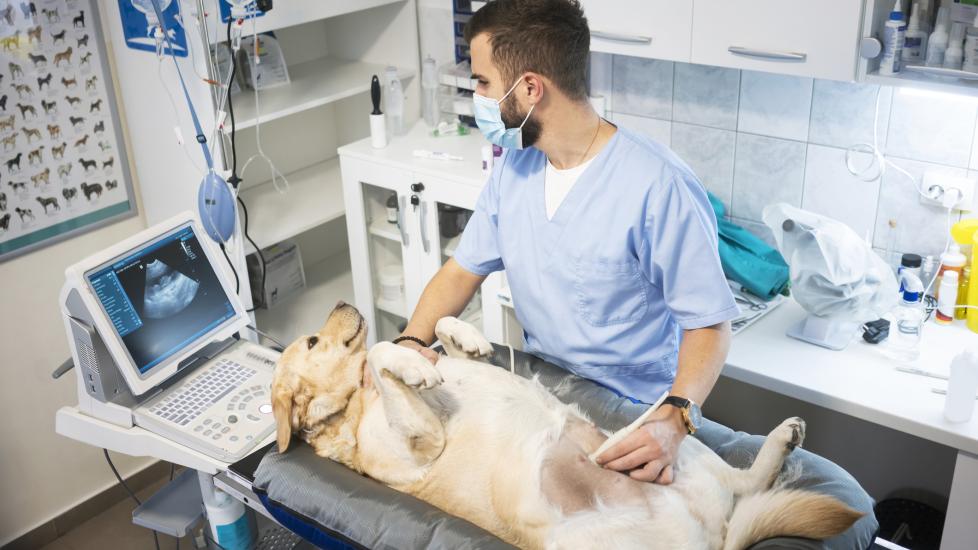
Image Source: image.petmd.com
The Canine Ultrasound Process: Deciphering the Timeline
When your veterinarian recommends an ultrasound for your furry friend, a common question that arises is about the canine ultrasound duration. Many pet parents worry about how long their beloved companion will be away from them and what the veterinary ultrasound procedure length entails. Rest assured, while it’s a thorough diagnostic tool, it’s usually a relatively quick process.
Fathoming the Factors Influencing Ultrasound Time
Several elements can sway the total time spent in the ultrasound suite. Let’s break down what influences the overall pet ultrasound appointment duration.
Patient Cooperation: A Tail of Temperament
The most significant factor often comes down to your dog’s temperament. A calm, well-socialized dog who is comfortable being handled will generally make the process much smoother and faster. If your dog is anxious, fearful, or sensitive to touch, the veterinary team will need to take extra time to ensure they are as relaxed as possible. This might involve:
- Gentle handling and reassurance: Staff trained in animal behavior will use soft voices and slow movements.
- Positive reinforcement: Treats and praise can go a long way in making the experience less stressful.
- Sedation or mild tranquilizers: In some cases, for highly anxious or reactive dogs, a mild sedative may be administered to ensure a safe and efficient scan. This adds time for the medication to take effect and for recovery, but it is often crucial for obtaining diagnostic-quality images.
Area of Focus: Where the Ultrasound Wand Wanders
The specific organ or body part being examined plays a crucial role in the canine ultrasound duration. Different areas require varying levels of detail and attention.
-
Dog Abdominal Ultrasound Time: An abdominal ultrasound is one of the most common types. It involves scanning multiple organs within the abdomen, such as the liver, kidneys, spleen, stomach, intestines, and bladder. Because of the number of organs to assess, a comprehensive dog abdominal ultrasound time can range from 30 to 60 minutes. The veterinary technician or radiologist will systematically move the ultrasound probe across different abdominal quadrants, capturing images of each organ. They will be looking for anomalies in size, shape, texture, and blood flow.
-
Dog Kidney Ultrasound How Long: When the veterinarian specifically needs to assess the kidneys, such as looking for stones, inflammation, or signs of disease, the focus is more concentrated. A dedicated dog kidney ultrasound how long it takes might be shorter, perhaps 15-20 minutes, but this is often done in conjunction with other abdominal organs. If a detailed study of the kidneys and their surrounding structures is needed, it could extend.
-
Dog Heart Ultrasound Time: A cardiac ultrasound, or echocardiogram, is a specialized procedure. It requires precise measurements of the heart’s chambers, valves, and overall function. Because of the intricate nature of cardiac imaging and the need to capture specific views in motion, a dog heart ultrasound time can be longer, often ranging from 30 to 60 minutes or even more. This is a highly detailed scan performed by a veterinary cardiologist or a technician with advanced training.
-
Dog Bladder Ultrasound Duration: Examining the bladder, for instance, to check for stones, tumors, or signs of infection, might be a quicker procedure. A dog bladder ultrasound duration could be as short as 10-15 minutes if it’s an isolated scan. However, it’s often part of a broader abdominal ultrasound.
-
Dog Reproductive Ultrasound Length: For reproductive purposes, such as assessing pregnancy or checking reproductive organs, the dog reproductive ultrasound length can vary. A pregnancy confirmation might be relatively quick once the uterus is visualized. However, assessing reproductive health, diagnosing conditions like pyometra (uterine infection), or monitoring estrus cycles might involve more detailed imaging and take longer, potentially 20-40 minutes.
Technical Expertise and Equipment
The skill and experience of the veterinary sonographer or radiologist performing the ultrasound significantly impact the veterinary ultrasound procedure length. Highly experienced professionals can acquire images more efficiently and accurately. Additionally, the quality of the ultrasound equipment can influence the speed and clarity of the images, potentially reducing the need for repeat scans.
The Need for Repeat Views and Measurements
Sometimes, the initial scan might reveal something that requires closer inspection. The veterinary team may need to:
- Obtain multiple views: To get a complete picture, different angles and planes are examined.
- Take detailed measurements: Specific measurements of organs, lesions, or fluid pockets are crucial for diagnosis.
- Perform Doppler studies: This assesses blood flow within organs and can add time to the procedure.
These steps are vital for accurate diagnosis, and while they extend the canine diagnostic imaging time, they are essential for your dog’s health.
What Happens During a Dog Ultrasound?
To better grasp the veterinary ultrasound procedure length, it’s helpful to know what happens during the scan.
-
Preparation: Your dog will typically be asked to fast for 8-12 hours before the abdominal ultrasound to ensure the stomach and intestines are empty, providing clearer views of other organs. For cardiac ultrasounds, fasting is usually not required. The area to be scanned will be carefully clipped of fur to allow good contact with the ultrasound probe. A special ultrasound gel is applied to the skin. This gel helps eliminate air pockets between the skin and the probe, allowing sound waves to travel more effectively.
-
Positioning: Your dog will be gently positioned on a comfortable surface, usually the examination table. They might lie on their back, side, or stand, depending on the area being scanned and their ability to cooperate. The veterinary team will use soft restraints or the assistance of a handler to keep your dog still during the procedure.
-
Scanning: The sonographer or veterinarian will apply the ultrasound probe to the prepared area. The probe emits high-frequency sound waves that bounce off the internal organs. These waves are then received back by the probe and translated into images on a monitor. The operator will systematically move the probe, adjusting the angle and pressure to visualize different structures. They will be looking at the size, shape, echogenicity (how the tissue reflects sound waves), and texture of the organs.
-
Doppler Imaging (if needed): For assessing blood flow, a Doppler function is used, which adds color to the ultrasound images to show direction and speed of blood.
-
Image Capture: As they scan, the technician will capture still images and sometimes video clips of important findings or areas of concern. These images are saved for later review and interpretation.
-
Post-Scan: Once the scan is complete, the gel is wiped away, and your dog is free to go. Depending on whether sedation was used, your dog may need a short period of observation before going home.
Preparing Your Dog for an Ultrasound Appointment
Proper preparation can significantly contribute to a smoother and potentially quicker pet ultrasound appointment duration.
- Fasting: As mentioned, for abdominal ultrasounds, fasting is crucial. Always confirm the exact fasting instructions with your veterinarian.
- Exercise: A good walk before the appointment can help your dog relieve themselves and potentially be more relaxed. Avoid over-excitement.
- Familiarity: If possible, practice handling your dog’s abdomen and limbs at home to get them accustomed to being touched in different areas.
- Calmness: Your own calm demeanor will transfer to your dog. Try to remain relaxed and reassuring.
What Can a Dog Ultrasound Detect?
Ultrasound is a powerful diagnostic tool that allows veterinarians to visualize internal organs without surgery. It can help detect a wide range of conditions, including:
- Tumors and masses: Identifying abnormal growths within organs.
- Inflammation: Detecting signs of pancreatitis, inflammatory bowel disease, or other inflammatory conditions.
- Organ enlargement or shrinkage: Indicating various diseases.
- Fluid accumulation: Such as ascites (fluid in the abdomen) or effusions (fluid around organs).
- Kidney and bladder stones: Visualizing calcifications.
- Pregnancy: Confirming pregnancy and monitoring fetal development.
- Congenital abnormalities: Structural defects present from birth.
- Cardiac abnormalities: Assessing heart valve function and chamber size.
The Result: Interpretation of the Ultrasound Images
After the ultrasound is performed, the images are reviewed by a veterinarian, often a board-certified radiologist for complex cases. They will compile a detailed report outlining their findings. This interpretation is a critical part of the canine diagnostic imaging time. The veterinarian will then discuss these findings with you and explain what they mean for your dog’s health, recommending further diagnostic steps or treatment plans as needed.
Frequently Asked Questions (FAQ)
Q: Do I need to stay with my dog during the ultrasound?
A: Generally, the veterinary technician will ask you to wait in the waiting area during the scan. This is to minimize distractions for your dog and allow the sonographer to work efficiently. However, if your dog is particularly anxious, or if the clinic has specific policies, you might be able to stay for a portion of the procedure, especially if you can help keep them calm.
Q: Will my dog feel pain during the ultrasound?
A: No, the ultrasound procedure itself is painless. The sound waves used are not harmful or felt by the dog. The only potential discomfort might come from the clipping of fur or the application of gel, which are typically mild sensations.
Q: Can I give my dog any medication before the ultrasound to help them relax?
A: It’s best to discuss this with your veterinarian. They may recommend a mild sedative or anti-anxiety medication to be given at home before the appointment, especially if your dog is known to be anxious. Do not give any medication without veterinary approval.
Q: What if my dog is too stressed for the ultrasound?
A: If your dog is too stressed or uncooperative for a safe and effective scan, the veterinarian may suggest sedation or a mild anesthetic. This allows the procedure to be completed thoroughly and safely. The decision to sedate is always made with your dog’s well-being in mind.
Q: How long does it take to get the results?
A: The images are usually interpreted immediately after the scan by the veterinarian performing it. They can often discuss preliminary findings with you at the end of the appointment. If a specialist review is required, it might take a few days to receive the final report.
Q: Does the length of the ultrasound appointment include the time for the doctor to explain the results?
A: The pet ultrasound appointment duration typically refers to the time spent actively performing the scan and preparing the dog. The discussion of results will usually happen after the scan is completed and the images have been reviewed, and this consultation time is separate.
Q: Can I feed my dog before a heart ultrasound?
A: For a cardiac ultrasound (echocardiogram), fasting is typically not required. However, it’s always best to confirm with your veterinarian before the appointment.
Q: What is the difference between a sonogram and an ultrasound for dogs?
A: “Sonogram” and “ultrasound” are often used interchangeably when referring to this diagnostic imaging technique. A sonogram is the visual representation of the images produced by the ultrasound machine. So, how long does a sonogram take for a dog is essentially the same question as how long does a dog ultrasound take.
In conclusion, while the exact canine ultrasound duration can fluctuate, understanding the factors involved helps pet owners prepare for the appointment and alleviates common concerns. The goal is always to obtain accurate diagnostic information efficiently and with minimal stress for your beloved pet.