
A dog X-ray typically takes between 10 to 30 minutes from start to finish, including preparation and the actual imaging. This timeframe can vary depending on the number of views needed, your dog’s temperament, and the veterinary clinic’s workflow.
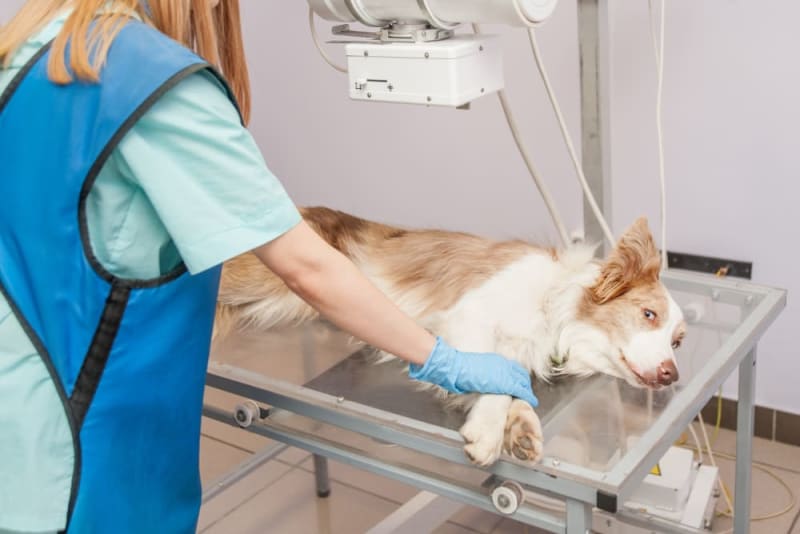
Image Source: d2zp5xs5cp8zlg.cloudfront.net
Preparing for Your Dog’s X-ray Appointment
Bringing your dog in for an X-ray can feel a bit nerve-wracking, but a little preparation can make the pet x-ray appointment time smoother for everyone. Your vet’s office will likely provide specific instructions, but here’s a general rundown of what to expect and how you can help.
Pre-Appointment Checklist
- Food and Water Restrictions: Your veterinarian will tell you if your dog needs to fast before the X-ray. This is particularly important if sedation or anesthesia is anticipated, as it helps prevent vomiting and potential aspiration. Always confirm these instructions.
- Medication: If your dog is on regular medication, discuss with your vet whether to administer it before the appointment. Some medications might interfere with sedation or the X-ray process.
- Comfort and Familiarity: Bring your dog’s favorite blanket or a familiar toy. This can offer comfort in a new environment.
- Leash and Collar/Harness: Ensure your dog is on a secure leash and wearing a properly fitted collar or harness. This is crucial for safety during transport and within the clinic.
- Previous Medical Records: If this is a new clinic or the X-ray is related to a specific ongoing issue, bring any relevant past medical records, especially previous X-rays or lab work.
The Canine X-ray Procedure: What Happens During the Appointment?
The canine x-ray procedure length can vary, but the core steps usually remain consistent. The goal is to capture clear images of the area of concern as safely and efficiently as possible.
Arrival and Check-in
Upon arrival at the veterinary clinic, you’ll check in at the reception desk. The veterinary staff will confirm your appointment details and ask about any recent changes in your dog’s health.
Pre-X-ray Examination
Before the X-ray itself, a veterinary technician or veterinarian will likely perform a brief physical examination. They will assess your dog’s general condition, listen to their heart and lungs, and check their vital signs. This helps ensure your dog is healthy enough for the procedure, especially if sedation might be used.
Positioning and Imaging
This is the core part of the time for dog x-ray scan. Your dog will be carefully positioned by the veterinary technician or radiographer. Depending on the area being X-rayed, your dog might need to be:
- Standing: Often used for orthopedic X-rays of limbs or the spine.
- Lying on their side (lateral recumbency): Common for chest or abdominal X-rays.
- Lying on their back (dorsal recumbency): Used for specific views, like some abdominal or pelvic X-rays.
- Lying on their belly (sternal recumbency): Also used for specific views.
They may use sandbags, foam wedges, or specialized positioning aids to help your dog stay still. For some X-rays, particularly those of the chest or abdomen, your dog might need to hold their breath for a split second when the image is taken. This is why sedation is often used – it helps the dog relax and remain still, which is vital for obtaining diagnostic-quality images.
The actual exposure time for each X-ray image is incredibly short, usually a fraction of a second. However, multiple views are almost always taken to get a complete picture. For instance, a hip X-ray might require at least two views (front-on and side), while a chest X-ray might need a lateral (side) view and a dorsoventral (top-to-bottom) view.
Sedation and Anesthesia Considerations
For many X-rays, especially if the dog is anxious, painful, or requires precise positioning, sedation or general anesthesia may be recommended.
- Sedation: A mild sedative can help your dog relax and remain calm. They will be drowsy but still responsive. The veterinary x-ray process time might be slightly longer as the sedative takes effect and wears off.
- General Anesthesia: For more complex procedures or if the dog is in significant pain, general anesthesia might be used. This puts the dog into a deeper sleep, ensuring they are completely still and comfortable. Anesthesia requires more preparation, monitoring during the procedure, and recovery time afterward.
The decision to sedate or anesthetize is always made in your dog’s best interest for their safety and to ensure the quality of the X-ray images.
Factors Influencing Dog X-Ray Duration
Several factors can influence the overall dog x-ray duration. Knowing these can help you have a more realistic expectation for your visit.
Number of Views Required
The most significant factor is how many different angles or views of the body part are needed.
* Simple Thorax X-ray: Might require just two views (lateral and VD).
* Orthopedic X-ray: For a joint issue, like a suspected fracture or hip dysplasia, multiple views are often necessary to assess the bones from different angles. This can include skyline views, oblique views, and stress views. For example, a dog orthopedic x-ray time for a complex fracture might involve more views than a routine hip screening.
* Dental X-rays: A dog dental x-ray duration can also vary. A full mouth dental X-ray series will involve taking an image of each tooth, which naturally takes longer than a single X-ray of one area.
Dog’s Temperament and Cooperation
- Calm and Cooperative Dogs: These dogs make the process much quicker. They are more likely to stand or lie still without much assistance.
- Anxious or Fearful Dogs: These dogs may require more time for calming techniques or sedation. Moving them into position can also take longer.
- Painful Dogs: If your dog is in pain, handling them carefully is paramount. This can slow down the positioning process. Sedation is often a good option in these cases.
Need for Sedation or Anesthesia
As mentioned, if sedation or anesthesia is administered, this adds to the overall pet x-ray appointment time. This includes:
* Time for the medication to take effect.
* Careful monitoring during the procedure.
* Recovery time after the X-ray before your dog is fully alert.
Equipment and Clinic Workflow
- Modern Equipment: Newer, more efficient X-ray machines can sometimes speed up the process.
- Staff Experience: Experienced veterinary technicians are skilled at positioning animals quickly and safely.
- Clinic Scheduling: How busy the clinic is can also play a role. If the X-ray suite is in high demand, there might be a short wait between procedures.
Specific Areas of Concern
- Abdominal X-rays: These might involve capturing multiple organs, potentially requiring different positions to view the intestines, stomach, liver, and kidneys clearly.
- Thoracic X-rays: Imaging the lungs and heart often requires specific breathing techniques to be captured effectively.
What to Expect After the X-ray
Once the X-rays are taken, the process isn’t quite finished for you and your dog.
Recovery (if sedated/anesthetized)
If your dog received sedation or anesthesia, they will be taken to a quiet recovery area. Veterinary staff will monitor them closely as they wake up. They might be a bit groggy or disoriented for a while.
Waiting for Results
This is a crucial part of the dog x-ray results waiting time.
* Immediate Interpretation: In many cases, a veterinarian can review the X-rays immediately after they are taken to provide a preliminary assessment.
* Radiologist Review: For more complex cases or if the clinic has a specialist radiologist service, the X-rays might be sent out for a detailed report. This can take anywhere from a few hours to a few days, depending on the service. Your vet will let you know how and when you can expect the full report.
* Discussion with Your Vet: Your veterinarian will discuss the findings with you, explaining what the X-rays show and recommending the next steps, whether it’s treatment, further diagnostics, or simply monitoring.
Going Home
Most dogs can go home the same day after an X-ray, especially if only mild sedation was used. If general anesthesia was administered, they may need to stay a bit longer for observation until they are fully recovered and able to walk steadily. You’ll likely receive instructions on how to care for your dog at home, including any medication and activity restrictions.
Common Reasons for Dog X-rays
X-rays are a cornerstone of veterinary diagnostics, providing invaluable internal views. Here are some common reasons why your veterinarian might recommend X-rays for your dog:
Diagnosing Musculoskeletal Issues
- Fractures and Dislocations: X-rays are the primary tool for identifying broken bones or joints that have come out of place.
- Arthritis (Degenerative Joint Disease): They show changes in the joint spaces, bone spurs, and inflammation characteristic of arthritis, especially important for dog orthopedic x-ray time assessments.
- Hip Dysplasia: Specific X-ray views are used to diagnose hip dysplasia, a common genetic condition in many breeds.
- Spinal Problems: X-rays can reveal issues like herniated discs, spinal deformities, or instability.
- Tumors: Bone tumors or soft tissue masses that affect bone can often be detected.
Evaluating Internal Organs and Conditions
- Chest X-rays (Thoracic): Used to assess the lungs for pneumonia or cancer, the heart for size and shape changes (indicating heart disease), and to look for fluid or masses in the chest cavity.
- Abdominal X-rays: Can help identify enlarged organs, foreign objects swallowed by the dog, bladder stones, intestinal blockages, or tumors in the abdomen.
- Dental X-rays: Crucial for assessing the health of tooth roots, detecting abscesses, and identifying unerupted teeth or bone loss around the teeth, which is key for dog dental x-ray duration evaluations.
Pre-Surgical Planning
Before surgery, X-rays can help the veterinarian understand the exact location and extent of a problem, allowing for more precise surgical planning.
Monitoring Treatment Progress
X-rays can be used to track the healing of a fracture or to monitor the effectiveness of treatments for conditions like arthritis.
Frequently Asked Questions (FAQ)
Q: Can I stay with my dog during the X-ray?
A: This varies by clinic policy and the specific procedure. Often, for safety reasons (due to radiation exposure), owners are asked to wait in the waiting area. If sedation is not used and your dog is very anxious, some technicians might allow a trusted owner to be present for comfort, but they will be given protective lead shielding.
Q: How many X-rays are usually taken for a specific area?
A: Typically, at least two views are taken to provide a 3D perspective of the area. For example, a limb might have a lateral and an anteroposterior (front-to-back) view. Complex orthopedic issues or abdominal scans might require more.
Q: Is radiation dangerous for my dog?
A: Veterinary X-ray equipment is designed to use the lowest effective dose of radiation. The exposure time for each image is very brief. The benefits of obtaining diagnostic information to guide treatment far outweigh the minimal risks associated with a few X-ray exposures. Veterinary staff also use protective lead shielding for themselves.
Q: What if my dog is too scared or aggressive for X-rays?
A: If your dog is very anxious, fearful, or aggressive, sedation or general anesthesia is often the safest and most effective option. This allows the veterinary team to obtain the necessary images without causing undue stress or risk to your pet or the staff.
Q: How long does it take to get the X-ray results?
A: Preliminary results are often available immediately after the X-ray is taken, as the veterinarian can view them on a screen. However, a full, detailed report from a veterinary radiologist may take several hours to a few days. Your clinic will inform you about their specific turnaround time.
Q: Does the cost of the X-ray include the interpretation?
A: The cost typically covers the taking of the X-rays and an initial interpretation by the veterinarian on staff. If a referral to a board-certified radiologist for a detailed report is made, there will usually be an additional fee.
Conclusion
The entire process for a dog X-ray, from arrival to departure, is designed to be as efficient and stress-free as possible. While the actual imaging is quick, factors like preparation, positioning, potential sedation, and the number of views required all contribute to the overall dog imaging appointment duration. By being prepared and communicating with your veterinary team, you can help ensure a smooth experience for your beloved canine companion, leading to the vital diagnostic information needed for their health and well-being.