
A dog has two anal glands, also known as anal sacs. These small, scent-producing glands are located on either side of a dog’s anus, typically at the 4 o’clock and 8 o’clock positions relative to the tail.
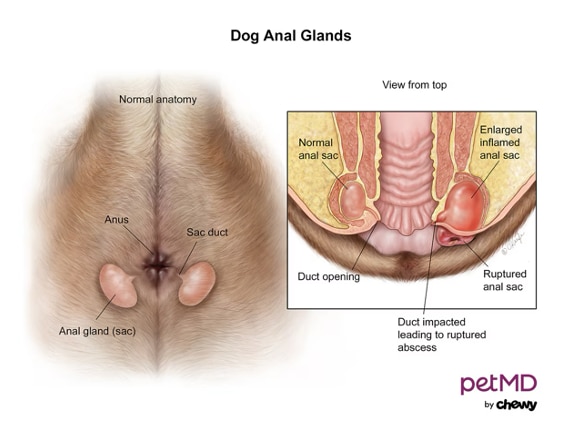
Image Source: image.petmd.com
Deciphering Dog Anal Sacs
Anal sacs, often referred to as anal glands, are a fascinating and sometimes problematic part of canine anatomy. These small, paired sacs are tucked away just inside a dog’s anus. Think of them as tiny reservoirs, each connected by a small duct to the outside world. Their primary purpose? To store a pungent, oily liquid that is as unique to each dog as a fingerprint. This scent acts as a territorial marker and a form of communication. When your dog defecates, the pressure from the stool passing through the anus normally squeezes these sacs, releasing a small amount of this liquid. This leaves a scent signature on their feces, informing other dogs about their identity, mood, and health.
Dog Anal Gland Location: Pinpointing the Pouch
The precise dog anal gland location is critical for both veterinary professionals and, at times, concerned pet owners. These glands are situated internally, nestled within the sphincter muscles of the anus. Most commonly, they are found at the 4 o’clock and 8 o’clock positions when viewing the dog from behind, with the tail held up. Each sac has a narrow duct that opens onto the anal verge, the edge of the anus. While not visible externally unless they are severely impacted or infected and swollen, their internal position is key to understanding how they function and why they can cause issues.
The Intricate Anatomy of Dog Anal Glands
To truly grasp the function and potential problems associated with dog anal sacs, a look at their dog anal gland anatomy is essential. Each anal sac is a small, pouch-like structure lined with specialized glands that secrete a fluid. This fluid is a complex mixture of volatile organic compounds, lipids, and proteins. The ducts leading from these sacs are narrow and can become easily blocked, leading to various dog anal gland problems. The musculature surrounding the anus plays a vital role in the natural expression of these sacs during defecation.
Inside the Anal Sacs: What They Hold
The substance within the dog anal sacs is often described as fishy or foul-smelling. Its purpose is multifaceted:
- Territorial Marking: When dogs defecate, the scent from the anal sacs marks their territory.
- Communication: The scent conveys information about the dog’s sex, health, and even emotional state to other dogs.
- Lubrication: The fluid may also contribute to lubricating the anal canal, aiding in the passage of stool.
Why Do Anal Glands Cause Problems?
Despite their evolutionary purpose, dog anal sacs are a common source of veterinary visits. Blockages, inflammation, infection, and even tumors can arise, causing significant discomfort for your pet.
Dog Anal Gland Problems: A Common Canine Complaint
Several issues can arise with dog anal sacs:
- Impaction: This is the most frequent problem. When the sacs don’t empty properly, the fluid thickens and builds up, causing discomfort and pressure. This is known as dog anal gland impaction.
- Infection: Blocked sacs can become breeding grounds for bacteria, leading to an infection. This is called dog anal gland infection.
- Abscess: If an infection is left untreated, the sac can rupture and form an abscess, a painful collection of pus.
- Tumors: Though less common, tumors can develop within the anal sacs.
Dog Anal Gland Impaction: The Blocked Passage
Dog anal gland impaction occurs when the ducts leading from the sacs become blocked. This prevents the normal expulsion of the anal sac fluid. Several factors can contribute to impaction, including:
- Soft Stools: Diarrhea or loose stools may not provide enough pressure to express the sacs.
- Hard Stools: Conversely, very hard stools can sometimes obstruct the ducts.
- Allergies: Food or environmental allergies can cause inflammation of the anal glands and surrounding tissues, leading to blockages.
- Obesity: Excess weight can put pressure on the anal glands, potentially hindering their emptying.
- Lack of Exercise: Inactivity can sometimes contribute to poor muscle tone, which might affect the anal glands’ function.
- Genetics: Some breeds appear to be more prone to anal gland issues.
Symptoms of Dog Anal Gland Impaction
Recognizing the dog anal gland symptoms is crucial for early intervention. If your dog is suffering from impacted anal glands, you might observe:
- Scooting: Dragging their rear end on the ground.
- Licking or Chewing: Excessive attention to the anal area.
- Discomfort: Whining or yelping when the rear end is touched.
- Straining: Difficulty defecating or appearing constipated.
- Redness or Swelling: Visible inflammation around the anus.
- Foul Odor: A strong, unpleasant smell emanating from the rear.
- Blood or Pus: In more severe cases, you might see blood or pus on the stool or around the anus.
Dog Anal Gland Infection: When Bacteria Take Hold
A dog anal gland infection typically arises as a complication of impaction. When the stagnant fluid in the anal sac becomes infected, it can lead to pain, swelling, and the production of pus.
Symptoms of Dog Anal Gland Infection
The symptoms of infection often overlap with impaction, but may also include:
- Increased Pain: The dog may cry out even with gentle touch.
- Fever: In severe infections, the dog may develop a fever.
- Lethargy: A general lack of energy and enthusiasm.
- Loss of Appetite: The discomfort can reduce the dog’s desire to eat.
- Abscess Formation: A palpable lump or swelling may appear near the anus, which can rupture and drain pus.
Dog Anal Gland Removal: A Last Resort
In cases of chronic or recurring dog anal gland problems, particularly infections or impactions that don’t respond to other treatments, dog anal gland removal might be recommended. This surgical procedure, also known as an anal sacculectomy, is permanent and aims to prevent future issues.
When is Dog Anal Gland Removal Considered?
Veterinarians typically consider dog anal gland removal when:
- Chronic Impaction: The glands repeatedly become impacted, requiring frequent manual expression.
- Recurrent Infections: The sacs become infected frequently, leading to abscesses and significant discomfort.
- Non-Responsive Issues: The glands do not improve with medical management or manual expression.
- Tumors: If cancer is detected within the anal sacs.
The Surgical Procedure for Dog Anal Gland Removal
Dog anal gland removal involves surgically excising the anal sacs. There are two main approaches:
- Open Anal Sacculectomy: The surgeon makes an external incision over the anal sac. The sac is carefully dissected away from the surrounding tissues and removed. This method is often preferred as it reduces the risk of damage to the anal sphincter muscles.
- Closed Anal Sacculectomy: The surgeon first expresses the contents of the anal sac and then inserts a catheter into the duct. An incision is made directly over the catheter, and the sac is dissected and removed. This method can be less invasive but carries a slightly higher risk of sphincter damage.
Post-Operative Care and Potential Complications of Dog Anal Gland Removal
After dog anal gland removal, proper post-operative care is crucial for healing. This typically includes:
- Pain Management: Medications to control pain and inflammation.
- Antibiotics: To prevent infection at the surgical site.
- E-Collar: To prevent the dog from licking or chewing the incision.
- Restricted Activity: Limiting strenuous exercise for a period.
- Monitoring the Incision: Keeping the surgical site clean and dry.
Potential complications of dog anal gland removal can include:
- Wound Dehiscence: The surgical incision opening up.
- Infection: At the surgical site.
- Fecal Incontinence: Temporary or, rarely, permanent loss of bowel control if the sphincter muscles are damaged.
- Recurrence: In very rare cases, if a small portion of the sac is left behind.
Dog Anal Gland Expression: A Hands-On Approach
Dog anal gland expression is a procedure to manually empty the anal sacs. This is often performed by veterinarians or veterinary technicians, but some experienced pet owners may learn to do it at home.
When is Manual Expression Necessary?
Manual dog anal gland expression is typically recommended when:
- The dog shows signs of impaction (scooting, licking).
- The glands are consistently full at routine veterinary check-ups.
- As a preventative measure for breeds prone to anal gland issues.
How is Dog Anal Gland Expression Performed?
Dog anal gland expression involves:
- Gloving: Wearing disposable gloves.
- Lubrication: Applying a lubricant to the gloved finger.
- Insertion: Gently inserting the lubricated finger into the dog’s anus, aiming for the 4 o’clock and 8 o’clock positions.
- Palpation: Feeling for the anal sacs, which are usually about the size of a pea or small grape.
- Gentle Squeeze: Using the thumb and index finger to apply gentle pressure to the sac, extruding the contents. The fluid can be expressed externally onto a tissue or paper towel.
- Cleaning: Wiping the area clean after the procedure.
Important Note: This procedure should ideally be performed by a veterinary professional, especially if you are not experienced, as improper technique can cause injury or worsen existing problems.
Caring for Your Dog’s Anal Glands: Proactive Measures
Consistent dog anal gland care can help prevent many of the common problems.
Dietary Adjustments for Anal Gland Health
A high-fiber diet is often recommended for dogs prone to anal gland issues. Fiber helps to add bulk to the stool, which in turn provides more pressure for natural anal sac expression.
- Increase Fiber: Incorporating foods like pumpkin (plain, canned), sweet potato, or psyllium husk into your dog’s diet can be beneficial.
- High-Quality Diet: Feeding a balanced, high-quality commercial dog food can also support overall digestive health.
- Hydration: Ensuring your dog drinks plenty of water is vital for maintaining soft, easily passed stools.
Regular Veterinary Check-ups
Routine veterinary visits are essential for monitoring your dog’s anal gland health. Your veterinarian can:
- Check the anal glands for fullness or signs of problems.
- Perform manual expression if needed.
- Advise on dietary changes or other preventative measures.
- Identify and treat any underlying conditions contributing to anal gland issues, such as allergies or parasites.
Recognizing and Addressing Early Signs
Being attentive to your dog’s behavior is key. If you notice any of the dog anal gland symptoms mentioned earlier, such as scooting or excessive licking, consult your veterinarian promptly. Early detection and treatment can prevent more serious complications like infections and abscesses.
Breed Predispositions and Anal Gland Issues
While any dog can experience anal gland problems, certain breeds appear to be more genetically predisposed. These include:
- Small Breeds: Dachshunds, Chihuahuas, Yorkshire Terriers, and Shih Tzus are frequently affected.
- Bulldogs: Both English and French Bulldogs are known for their susceptibility.
- Poodles: Standard, Miniature, and Toy Poodles can also have recurring issues.
- Basset Hounds: Their lower set tails and body structure may contribute to problems.
Frequently Asked Questions (FAQ)
Q1: How often should my dog’s anal glands be expressed?
A: This varies greatly depending on the individual dog. Some dogs never need manual expression, while others may require it every few weeks or months. Your veterinarian can best advise you on the appropriate frequency for your dog based on their specific needs.
Q2: Can I express my dog’s anal glands myself?
A: While it is possible to learn how to express your dog’s anal glands, it is generally recommended to have a veterinarian or veterinary technician perform this procedure, especially if you are not experienced. Improper technique can cause pain, injury, or worsen the problem.
Q3: What is the cost of dog anal gland removal?
A: The cost of dog anal gland removal can vary significantly depending on your location, the veterinary clinic, and the specific surgical approach used. It typically ranges from a few hundred to over a thousand dollars. It’s best to get a detailed estimate from your veterinarian.
Q4: Are there natural remedies for anal gland problems?
A: While dietary changes like adding fiber can help prevent issues, there are no proven “natural cures” for impacted or infected anal glands. Always consult your veterinarian before trying any home remedies, as some may be ineffective or even harmful.
Q5: My dog’s anal glands smell really bad. Is this normal?
A: While the anal sac fluid has a strong, unpleasant odor, a sudden increase in foul smell or a persistent strong odor can indicate a problem like impaction or infection. It’s best to have your veterinarian examine your dog if you notice any significant changes in smell.
By familiarizing yourself with the anatomy, function, and common issues associated with dog anal sacs, you can better advocate for your dog’s health and seek appropriate veterinary care when needed. Early detection and consistent care are the cornerstones of keeping your canine companion comfortable and free from the discomfort of dog anal gland problems.