
Can you retrieve ducks without a dog? Yes, it is absolutely possible to retrieve ducks without a dedicated retriever dog, though it often requires more effort, planning, and specialized gear. This guide will walk you through effective strategies and essential tools for successful duck retrieval without a canine companion.
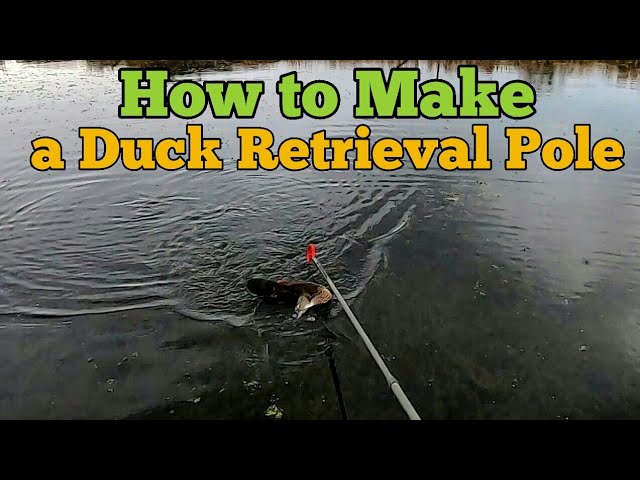
Image Source: i.ytimg.com
The Challenges of Duck Retrieval Without a Retriever
Retrieving downed ducks can be tricky, especially in dense vegetation, deep water, or strong currents. When you don’t have a trusty retriever by your side, these challenges can multiply. You might face difficulties in:
- Marking Downed Ducks: Accurately spotting where a bird has landed is crucial. Without a dog’s keen eyes and trained memory, hunters must rely solely on their own observation skills.
- Reaching Downed Ducks: Some birds fall into areas that are inaccessible on foot or require swimming in cold water.
- Searching for Lost Ducks: Crippled birds can dive, swim, or hide, making them difficult to find if they aren’t immediately visible.
- Waterfowl Retrieval in Tough Conditions: Weather, water depth, and plant cover all add layers of complexity.
Duck Hunting Alternatives for Manual Recovery
When you’re hunting waterfowl without a retriever, your approach to duck hunting alternatives needs to be adapted. The core goal remains the same: secure your quarry. However, the methods shift from relying on a dog’s natural abilities to employing human ingenuity and specific equipment. This means paying closer attention to shot placement, practicing good marking downed ducks techniques, and being prepared for the physical act of manual duck recovery.
Mastering the Shot for Easier Retrieval
The first and most critical step in duck retrieval without a dog is to make good shots. This sounds obvious, but it’s paramount when you don’t have a dog to clean up missed opportunities.
- Aim for a Clean Kill: Focus on head and neck shots. These are more likely to result in an immediate kill, minimizing the chance of a cripple that dives or swims away.
- Know Your Effective Range: Don’t take shots beyond what your firearm and ammunition can reliably deliver. This reduces wounding and the subsequent difficulty in retrieval.
- Follow Through: A good follow-through on your swing helps ensure a solid hit.
Marking Downed Ducks: Your Eyes are Your Dog’s Nose
Without a dog’s nose, your eyes become your most important retrieval tool. This is where developing sharp marking downed ducks skills comes into play.
Techniques for Effective Marking
- Visual Aids: Use landmarks on the shore, prominent trees, or distinct features in the water. Note the direction and distance from these markers.
- The “12 o’clock” Method: Imagine a clock face centered on your position or the boat. If a duck falls to your left and slightly in front, it might be at “10 o’clock.”
- Range Estimation: Practice estimating distances in the field. This helps you know how far you might need to travel.
- Environmental Clues: Look for ripples, splashes, or floating feathers that indicate the duck’s landing spot.
- Teamwork: If hunting with others, designate one person to be the primary marker. They should keep their eyes on the bird until it hits the water and then communicate the location clearly to the person retrieving.
What to Do When Marking Becomes Difficult
Sometimes, even with the best intentions, marking can be tough:
- Fog and Low Light: In these conditions, visual marking is severely hampered. Rely more on sound and directional cues from your hunting party.
- Heavy Cover: Dense reeds or cattails can obscure the exact landing spot. Try to aim for areas of open water nearby if possible.
Reaching Downed Ducks: Tools of the Trade
Once you know where your duck went down, the next challenge is reaching downed ducks. This is where specialized gear can make a significant difference.
Essential Gear for Manual Duck Recovery
- Waders: Hip boots or chest waders are indispensable for wading into shallower water to retrieve birds. Ensure they fit well and are comfortable for extended wear.
- Retrieval Boats: A small, stable boat is often the best way to cover larger bodies of water.
- Jon Boats: These are popular for their stability and shallow draft, allowing access to more areas.
- Inflatable Boats: Lightweight and portable, they are great for smaller waters or when carrying a heavier boat is an issue.
- Kayaks and Canoes: While less stable for shooting, they can be excellent for quietly approaching downed birds and are easily maneuverable.
- Retrieval Poles/Booms: These long poles, often with a specialized grabber at the end, are designed to snag a duck without you having to get completely in the water. They are particularly useful for retrieving waterfowl by hand from a boat or when wading is difficult.
- Wading Staff: A sturdy staff can aid balance when wading through uneven or slippery terrain.
- Binoculars: Useful for getting a closer look at the downed bird’s location from a distance.
- GPS or Rangefinder: For precise location marking if you’re hunting unfamiliar territory.
Using a Boat for Ducks: Maximizing Your Reach
Using a boat for ducks opens up a world of possibilities for retrieval.
- Motorized vs. Paddle Power: For larger bodies of water, a trolling motor can be invaluable for quiet maneuvering and quickly reaching downed birds. Paddle power is sufficient for calmer, smaller areas.
- Boat Position: Position your boat so you have a clear line of sight to where the duck went down.
- Controlled Search: Once you’re near the suspected location, move slowly and methodically. Scan the water’s surface and along the banks.
- Anchor System: A good anchor can keep your boat in position while you search, preventing drift.
Searching for Lost Ducks: Persistence Pays Off
Sometimes, despite your best efforts, a duck can seem to vanish. This is when searching for lost ducks requires patience and a systematic approach.
Strategies for Finding Elusive Birds
- Work the Area Methodically: Don’t just thrash around. Swim or paddle in a grid pattern, covering the entire suspected area.
- Look for Subtle Signs: A single feather, a disturbed patch of weeds, or a faint ripple can indicate the duck’s presence.
- Check Downstream: If the duck was in a current, it might have drifted.
- Listen: Listen for the tell-tale sounds of a duck trying to escape or surface.
- Consider the Duck’s Behavior: Diving ducks are notorious for their ability to stay submerged and swim long distances underwater. Identify the species you’re hunting to anticipate its behavior.
-
Blind Retrieval Aids: These are tools that help you locate a bird even if you can’t see it directly.
- Retrieval Poles with Lights: Some poles have built-in lights to help you see into murky water.
- Floating Markers: While not for direct retrieval, bright markers can be dropped near the downed bird’s location to help you relocate the area if you lose sight of it.
Retrieving Waterfowl by Hand: The Final Step
This is the culmination of your efforts – retrieving waterfowl by hand. It’s often the most rewarding part of the process when done without a dog.
Tips for Safe and Effective Hand Retrieval
- Approach Calmly: Avoid startling the bird if it’s still alive and trying to escape.
- Secure Your Grip: Once you reach the duck, get a firm grip. Most hunters prefer to hold the bird by the neck or wing.
- Be Mindful of Sharp Bills and Talons: Some waterfowl can inflict minor injuries.
- Wear Gloves: Waterfowl can carry diseases, and gloves offer a barrier. They also improve grip, especially on wet birds.
- Know When to Call It: If a bird is severely injured and you cannot safely reach it, or if it’s clear it has escaped into inaccessible territory, you may have to accept the loss.
Duck Hunting Alternatives When Dogs Are Not an Option
For many, the decision to hunt without a retriever isn’t a choice but a reality. Perhaps you’re just starting out, or maybe you hunt in areas where dogs are impractical or prohibited. Whatever the reason, these duck hunting alternatives focus on self-reliance and smart equipment choices.
The “Lone Hunter” Approach
- Increased Scouting: Knowing the hunting grounds intimately is key. Identify blind spots, strong currents, and areas where birds are likely to fall.
- Decoy Placement: Strategically place decoys so downed birds are more likely to land within your retrieval range.
- Shotgun Skills: Honing your shooting is paramount. The fewer cripples you have, the easier retrieval will be.
Group Dynamics: Leveraging Your Hunting Partners
If you hunt with others, collaboration is a powerful tool.
- Designated Markers: Have one or two people specifically tasked with marking birds.
- Boat Teams: If you have multiple boats, one can act as a retrieval boat while others continue hunting.
- Communication: Clear and concise communication is vital. Call out distances, directions, and specific landmarks.
Specific Scenarios and Solutions
Let’s consider some common situations and how to tackle them without a retriever.
Scenario 1: Bird falls into dense marsh grass
- Your Approach: Waders are essential. Use a wading staff for stability. Move slowly and deliberately through the grass, using your eyes and ears to pinpoint the bird. A retrieval pole can sometimes snag it from a distance.
- Consider: Listen for movement. Sometimes the bird will try to swim or scurry away.
Scenario 2: Bird falls into deep, open water
- Your Approach: A boat is almost certainly necessary. Use your marking skills to get as close as possible. If it’s a dead duck, the retrieval pole can be helpful. If it’s a cripple, a careful approach with the boat may allow you to get close enough to net or hand-retrieve it.
- Consider: If the water is very cold, prioritize your safety. Don’t attempt retrieves that put you at undue risk.
Scenario 3: Bird lands in strong current
- Your Approach: This is one of the most challenging situations. You must anticipate drift immediately upon marking the bird. A boat with a motor is highly advantageous here. If you are wading, be extremely cautious.
- Consider: If the bird dives, it may resurface downstream. Be ready.
Scenario 4: Low light or foggy conditions
- Your Approach: Rely heavily on sound. Listen for the splash. Use any available landmarks that you can see clearly before the conditions worsen.
- Consider: If you truly cannot mark the bird, you may need to hold your fire on uncertain shots. This is where good judgment comes in.
Table: Gear Checklist for Duck Retrieval Without a Dog
| Gear Category | Essential Items | Optional/Situational Items |
|---|---|---|
| Wading Gear | Hip Waders / Chest Waders | Wading Boots, Neoprene Socks |
| Retrieval Tools | Retrieval Pole / Retriever Boom | Net, Glove |
| Boat Equipment | Jon Boat / Inflatable Boat / Kayak / Canoe | Trolling Motor, Anchor, Oars/Paddles, Life Vest |
| Navigation/Marking | Binoculars | GPS Device, Rangefinder, Floating Markers |
| Personal Safety | Warm Layers, Waterproof Outerwear, Gloves | First-Aid Kit, Whistle |
| Miscellaneous | Waterproof Bag for Gear, Duck Strap/Game Bag | Cleaning Kit, Water Bottle |
Frequently Asked Questions (FAQ)
Q1: Is it legal to retrieve ducks without a dog?
A1: Yes, it is perfectly legal to retrieve ducks without a dog in all areas where waterfowl hunting is permitted. The legality pertains to the act of hunting and retrieving, not the method used to do so.
Q2: What is the best type of boat for retrieving ducks without a dog?
A2: The best type of boat depends on the body of water you’ll be hunting. For general use, a stable, shallow-draft boat like a Jon boat or a sturdy inflatable boat is often ideal. If you’re hunting smaller, calmer waters, a kayak or canoe can also be effective. A boat with a trolling motor offers the most versatility for quiet maneuvering and reaching downed birds quickly.
Q3: How can I improve my ability to mark downed ducks?
A3: Practice is key. Use visual landmarks, develop an internal clock system (e.g., 10 o’clock, 2 o’clock), and estimate distances. If hunting with others, designate a primary marker and communicate clearly. Keep your eyes on the bird until it hits the water.
Q4: What should I do if a duck dives and disappears?
A4: Remain calm and continue scanning the area where you last saw it, as well as downstream or downwind. Ducks can swim considerable distances underwater. Listen for surfacing sounds. If you have a boat, you can slowly search the area, looking for ripples or floating feathers.
Q5: Are retrieval poles effective for retrieving waterfowl by hand?
A5: Retrieval poles are very effective for reaching ducks that are slightly out of arm’s reach or in water that is too deep to comfortably wade. They can often snag a bird quickly and efficiently.
Q6: What are some common mistakes hunters make when retrieving ducks without a dog?
A6: Common mistakes include poor marking of downed birds, wading into dangerous water without proper gear, not being prepared for the physical exertion of retrieval, and failing to secure a firm grip on the retrieved waterfowl.
Q7: Can I use a simple net for retrieving ducks?
A7: A simple net can be useful, especially for grabbing birds that are floating near your boat or the shore. However, for more challenging retrieves in dense vegetation or deeper water, a retrieval pole or wading into the water yourself might be necessary.
Q8: How do I handle a crippled duck that is trying to escape?
A8: Approach slowly and quietly. If possible, use your boat to cut off its escape route. If wading, try to guide it towards the bank or use a net to scoop it up. A quick and humane dispatch is the priority.
Q9: What safety precautions should I take when retrieving ducks without a dog?
A9: Always prioritize your safety. Wear a life vest if using a boat. Be aware of water depth and currents. If wading, use a wading staff for balance and wear appropriate footwear. Don’t attempt retrieves in conditions that put you at risk.
Q10: Are there any blind retrieval aids that can help me find ducks?
A10: While direct “blind retrieval aids” in the sense of something that physically finds the duck without you are rare for waterfowl retrieval without a dog, tools like high-powered flashlights on retrieval poles can help you see into murky water. Clear marking and accurate observation are your primary “aids.”