
Can you train a dog to heel? Yes, absolutely! With patience and the right techniques, you can teach your dog to walk calmly beside you. This skill, known as heeling, is a cornerstone of dog leash training and strengthens your bond, making walks enjoyable for both of you. We’ll guide you through the process, from basic obedience commands to more advanced techniques, ensuring you can train your dog to heel confidently.
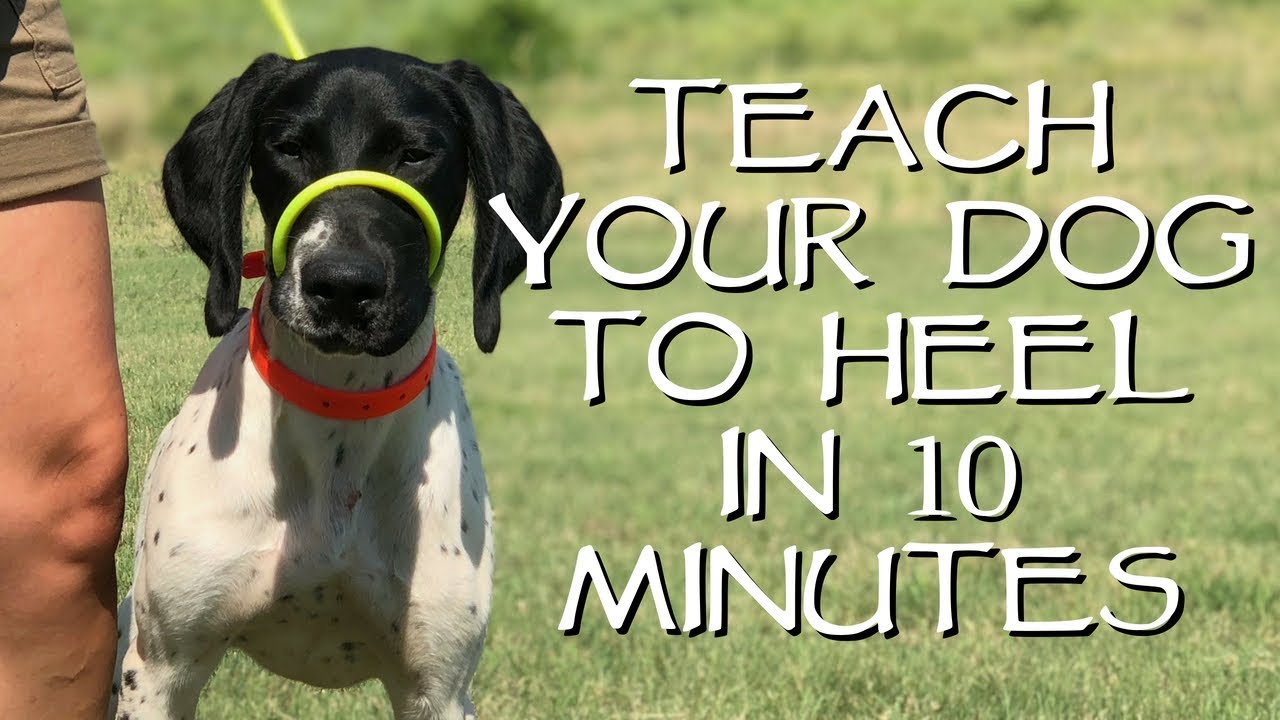
Image Source: i.ytimg.com
Getting Started: The Foundation of Loose Leash Walking
Before diving into formal heeling, it’s crucial to establish loose leash walking. This means your dog walks beside you without pulling. Think of it as the building block for everything else. A dog that’s comfortable walking on a loose leash is much more likely to grasp the concept of heeling.
Why Loose Leash Walking Matters
- Safety: A dog that pulls can be a danger to themselves and others. They might dart into traffic or pull you off balance.
- Enjoyment: Walks should be a pleasure, not a tug-of-war. Loose leash walking makes outings more relaxed.
- Control: It allows you to have better control over your dog in various situations.
- Foundation for Heeling: A dog that understands not to pull is ready to learn where to walk.
Essential Gear for Success
Choosing the right equipment can make a significant difference.
- Leash: A standard 4-6 foot leash is ideal. Avoid retractable leashes for training, as they encourage pulling.
- Collar/Harness:
- Flat Collar: Suitable for dogs that don’t pull excessively. Ensure it fits properly, with two fingers fitting snugly between the collar and the dog’s neck.
- Martingale Collar: A good option for dogs with slender heads (like sighthounds) that can slip out of flat collars. It tightens slightly when pulled but doesn’t choke.
- Front-Clip Harness: This harness clips at the dog’s chest. When the dog pulls, it redirects them back towards you, discouraging forward momentum. Many find this the most effective for preventing pulling.
- Head Halter (Gentle Leader, Halti): These fit over the dog’s muzzle and behind the ears. They offer significant control by guiding the dog’s head, and thus their body. Some dogs need an adjustment period to get used to them.
Table: Gear Pros and Cons
| Gear Type | Pros | Cons | Best For |
|---|---|---|---|
| Flat Collar | Simple, widely available. | Can be ineffective for strong pullers; potential for neck strain if pulled hard. | Dogs that don’t pull, or for identification tags. |
| Martingale | Prevents slipping; humane tightening. | Requires proper fit to be effective and humane. | Sighthounds, dogs with narrow heads. |
| Front-Clip | Discourages pulling by redirecting; humane. | Some dogs may rub at the chest; requires consistent handling. | Most dogs, especially strong pullers. |
| Head Halter | Excellent control; redirects head. | Requires acclimatization; can be misused to yank. | Strong pullers, dogs with good leash manners already. |
Positive Reinforcement: The Heart of Effective Training
Positive reinforcement is the most humane and effective way to train dogs. It involves rewarding desired behaviors, making them more likely to be repeated. This approach builds trust and a strong working relationship between you and your dog.
Core Principles of Positive Reinforcement
- Rewards: High-value treats (small pieces of chicken, cheese, or special training treats), praise, and toys work wonders.
- Timing: Rewards must be delivered within 1-2 seconds of the desired behavior. This helps the dog connect the action with the reward.
- Consistency: Everyone in the household should use the same commands and methods.
- Patience: Every dog learns at their own pace. Avoid frustration and keep training sessions positive.
Introducing Clicker Training for Dogs
Clicker training for dogs is a form of positive reinforcement that uses a clicker as a precise marker for the desired behavior.
- Loading the Clicker: Start by simply clicking the clicker and immediately giving your dog a treat. Do this 10-15 times. Your dog will learn that the click predicts a reward.
- Marking Behavior: As your dog performs the desired action (like standing with a loose leash), click the moment they do it, then reward.
The clicker acts as a bridge, telling your dog, “Yes, that exact thing you just did is what I like!”
Teaching the “Heel” Command: Step-by-Step
The “Heel” command means your dog walks by your side, typically on your left, with their shoulder aligned with your leg. They should be looking forward, not at you, unless you ask for a specific check-in.
Step 1: Getting the Position Right
- Start with a Loose Leash: Begin with your dog on a loose leash, standing or walking beside you.
- Lure into Position: Hold a treat in your hand. Start walking. Hold the treat near your dog’s nose and lure them into the heel position (your left side, shoulder by your leg).
- Mark and Reward: The moment your dog is in the correct position, click (if using a clicker) and immediately give them the treat.
- Take a Few Steps: Take one or two steps forward. If your dog stays with you, click and reward.
- Repeat: Continue taking a few steps, luring, clicking, and rewarding whenever your dog is in the correct position.
Initial Goal: Your dog should be willing to walk with you for a few steps without pulling, staying close to your leg for a reward.
Step 2: Adding the Verbal Cue
Once your dog reliably follows the lure into the heel position:
- Say “Heel”: As you begin to lure your dog into the heel position, say the word “Heel” once.
- Lure, Mark, Reward: Continue to lure, mark (with a click or verbal marker like “yes”), and reward as they get into position and take a few steps.
- Fade the Lure: Gradually make your lure less obvious. Instead of holding the treat right at their nose, start holding it in a loose fist, then transition to a hand signal without a treat in it. The treat will now come from your pocket or a treat pouch.
Progression: Aim for your dog to start moving into the heel position when they hear the cue and see the hand signal, even with the lure almost gone.
Step 3: Increasing Duration and Distance
Now, you want your dog to hold the heel position for longer and over greater distances.
- Reward Frequently: At first, reward every few steps. As your dog improves, gradually increase the number of steps between rewards.
- Vary Your Pace: Walk at different speeds – slow, normal, and a brisk pace.
- Turn and Change Direction: Practice making turns, both left and right. Reward your dog for following you smoothly.
- Stop and Start: Practice stopping and starting again. Ensure your dog doesn’t surge ahead or lag behind.
Key: Focus on rewarding the process of walking correctly, not just the end position.
Managing Distractions: The Real Test
The true test of heeling is when there are distractions. Your dog’s world is full of exciting sights, sounds, and smells!
Strategies for Managing Distractions
- Start Small: Begin training in a quiet area with minimal distractions (e.g., your living room or backyard).
2. Gradual Introduction: As your dog gets better, introduce mild distractions. A quiet park, a quiet street.
3. Increase Difficulty: Slowly increase the level of distraction. More people, other dogs at a distance, squirrels.
4. Reward Heavily: When you encounter distractions, increase your reward rate significantly. Your dog needs a strong incentive to ignore tempting stimuli.
5. Use a Higher Value Treat: For distracting environments, use super-tasty treats that your dog only gets during these training sessions.
6. Create Distance: If a distraction is too much, increase the distance between your dog and the distraction. Move further away until your dog can remain focused.
7. “Look at That” Game: Teach your dog to look at a distraction, then look back at you for a reward. This changes their association with the distraction from excitement to a cue for a treat from you.
8. Pre-Empt Pulling: If you see a distraction coming, anticipate your dog’s reaction. You can change direction, speed up, or even step in front of your dog to block their view.
Example Scenario: You’re walking, and another dog appears. If your dog starts to lunge, don’t yank them back. Instead, turn and walk in the opposite direction while saying “Oops!” cheerfully. When you’re a safe distance away, reward your dog for moving with you. The goal is to teach them that pulling away from you leads to the distraction disappearing, while staying with you leads to rewards and eventually access to the distraction (at a distance, under your control).
Preventing Pulling: Proactive Measures
Preventing pulling is an ongoing part of loose leash walking and heeling.
Techniques to Prevent Pulling
- The “Stop-Start” Method: If your dog pulls ahead, stop walking. Stand still like a tree. Only resume walking when the leash slackens. This teaches your dog that pulling stops forward movement.
- “You Pull, I Stop”: This is the core of the stop-start method. Be consistent. If they pull, you stop. If they pull and you keep walking, you’re reinforcing their pulling behavior.
- “Change Direction”: If your dog pulls ahead, don’t pull them back. Instead, turn and walk in the opposite direction. They have to turn with you to stay with the leash.
- Reward Slack Leash: Actively reward your dog with treats and praise when the leash is slack, even if they aren’t in the perfect heel position yet. This encourages them to maintain slackness.
- Avoid Constant Jerking: While stopping is important, avoid constantly jerking the leash. This can be jarring and counterproductive. The goal is to communicate that pulling stops movement, not to punish them for it.
When to Seek Professional Help
If you’re struggling significantly with pulling or your dog exhibits aggressive behavior on leash, consult a certified professional dog trainer or a veterinary behaviorist. They can assess your specific situation and provide tailored guidance.
Puppy Heeling: Starting Early
Introducing heeling concepts to puppy heeling can be started from a young age. Puppies are sponges, and early training sets a great foundation.
Puppy-Specific Tips
- Short, Fun Sessions: Puppies have short attention spans. Keep training sessions brief (5-10 minutes) and always end on a positive note.
- Focus on Association: At this stage, focus on making the leash and walking beside you a positive experience. Use lots of praise and small, frequent rewards.
- Introduce the Leash Gradually: Let your puppy wear a lightweight collar or harness for short periods around the house before attaching a leash.
- Gentle Guidance: Don’t force your puppy into position. Use lures and positive reinforcement. If they resist, it’s too much, too soon.
- Socialization: Ensure your puppy is well-socialized. Exposure to various sights and sounds in a positive way will help them cope with distractions later.
Key takeaway for puppies: Make it a game, not a chore.
Advanced Heeling Techniques: Refining the Skill
Once your dog has a solid grasp of basic heeling, you can move on to more advanced techniques. This is where you truly build a confident, polished heeler.
Advanced Heeling Concepts
- Duration and Distance: Practice heeling for longer periods and across longer distances without losing focus.
- Complex Environments: Work in busier areas with more significant distractions.
- Varying Speeds and Turns: Incorporate faster walking, slow walking, walking backward, and sharper turns.
- “Heel” with a Distracted Dog: Practice the “heel” command when your dog is actively looking at a distraction. This requires strong impulse control.
- Walking on Different Surfaces: Practice on grass, gravel, pavement, etc.
- Changing the Handler: If possible, have different family members practice heeling with the dog to ensure the dog responds to the command regardless of who is holding the leash.
- Heeling with Objects: Practice heeling while you are carrying something or while objects are nearby.
Practicing Turns and Stops
- 180-Degree Turns (About Turns): Lure your dog to turn with you in a tight circle. Reward them for staying close.
- 90-Degree Turns: Practice turning corners smoothly.
- Halts: Practice stopping and having your dog sit or stand calmly beside you. Reward them for holding position.
Table: Progression of Heeling Skills
| Stage | Focus | Environment | Distractions | Rewards |
|---|---|---|---|---|
| Beginner | Luring into position, short duration | Quiet indoor/yard | Minimal | High frequency |
| Novice | Adding cue, increasing steps, basic turns | Quiet outdoor | Low | Moderate frequency |
| Intermediate | Longer durations, moderate distractions, stops | Moderately busy | Medium | Intermittent |
| Advanced | Complex environments, high distractions, speed changes | Busy urban/parks | High | Variable, strategic |
Troubleshooting Common Issues
Even with the best intentions, you might encounter challenges.
Common Problems and Solutions
- Dog constantly lags behind:
- Cause: May be fearful, bored, or simply doesn’t understand the benefit of staying with you.
- Solution: Use a more enticing lure or treat. Make the forward movement exciting. Reward them enthusiastically for moving with you. Ensure the leash is long enough to allow comfortable movement.
- Dog weaves back and forth:
- Cause: Unsure of where to be, excited, or practicing their own version of “loose leash.”
- Solution: Focus on reinforcing the exact position. Mark and reward when their shoulder is consistently by your leg. Shorten sessions if they get too excited.
- Dog looks at you all the time:
- Cause: Over-reliance on your presence, not independent walking.
- Solution: Gradually reduce eye contact from your dog. Reward them for looking forward while walking beside you. Use the “look at that” game to teach them to observe their surroundings and return focus to you when prompted, but not continuously.
- Dog is fearful or anxious:
- Cause: Past negative experiences, lack of socialization, inherent personality.
- Solution: Slow down the process significantly. Use very low-value distractions at a great distance. Focus on making every step a positive one. Consider consulting a professional for fear-based issues.
Frequently Asked Questions (FAQ)
Q1: How long does it take to train a dog to heel?
A1: The time it takes varies greatly depending on the dog’s age, breed, personality, and your consistency. Basic heeling might take a few weeks to a few months. Mastering advanced heeling with distractions can take much longer and is an ongoing process.
Q2: My dog is very strong and pulls me over. What should I do?
A2: Prioritize safety. Use a front-clip harness or head halter designed for strong pullers. Focus on consistent “stop-start” and “change direction” techniques. Work on building impulse control in a controlled environment before tackling walks in distracting areas. If you’re struggling, a professional trainer can offer personalized solutions.
Q3: Can I train an older dog to heel?
A3: Absolutely! While puppies often learn quickly, older dogs can certainly learn new tricks. It may take a bit more patience and understanding of any ingrained habits. Focus on positive reinforcement and make it a rewarding experience for your older companion.
Q4: My dog pulls the most when they see other dogs. How can I manage this?
A4: This is a very common issue. Start by training in a quiet area. Once your dog is doing well, introduce other dogs at a significant distance, far enough away that your dog can remain relatively calm. Reward them heavily for looking at the other dog and then looking back at you. Gradually decrease the distance as your dog shows improvement. If your dog reacts strongly, increase the distance again.
Q5: What if my dog walks on a loose leash but won’t stay in the heel position?
A5: The goal of loose leash walking is simply no pulling. Heeling requires a specific position. If your dog walks nicely beside you but doesn’t stay perfectly aligned with your leg, continue rewarding their good behavior. You can start to “shape” the exact position by rewarding them when they happen to be in the ideal spot, gradually increasing the criteria. Make sure you are marking the moment they are in the correct position.
Conclusion
Training your dog to heel confidently is a journey that requires dedication, patience, and a deep understanding of positive reinforcement. By focusing on loose leash walking as the foundation, employing reward-based training methods like clicker training for dogs, and gradually introducing distractions and advanced heeling techniques, you’ll build a strong partnership with your canine companion. Remember, every dog is an individual, so celebrate their progress, stay consistent, and enjoy the process of creating a well-behaved walking buddy. Happy training!